
Iowa is among the states where the brain-eating amoeba Naegleria fowleri has been detected over the years, according to new CDC data. The renewed attention comes after a North Carolina teenager fell critically ill from the rare infection, and just days after an 8-year-old Louisiana girl died from the same cause.
While infections remain extremely rare, the CDC has confirmed 173 U.S. cases of primary amebic meningoencephalitis (PAM) linked to known exposure between 1937 and 2025. Iowa appears on that list, meaning the amoeba has been found in the state's warm freshwater at some point during that period.
What is the brain-eating amoeba and how does it infect people?
Naegleria fowleri is a microscopic, single-celled organism that lives naturally in warm freshwater environments including lakes, rivers, ponds and hot springs. It causes a rare but devastating infection called primary amebic meningoencephalitis (PAM) when water containing the organism enters a person's nose. The amoeba then travels to the brain, where it destroys brain tissue and triggers severe inflammation.
People cannot become infected by drinking contaminated water, and the infection does not spread from person to person. The amoeba does not live in saltwater.
How common is the brain-eating amoeba in the U.S.?
The CDC says fewer than 10 cases are typically reported in the United States each year. Between 1962 and 2024, 167 U.S. cases were reported with only four known survivors. The disease advances rapidly, often leading to a coma or death within five days.
Most cases occur in males between the ages of 10 and 14. Most infections occur in July, with August not far behind.
Which states have reported brain-eating amoeba cases?
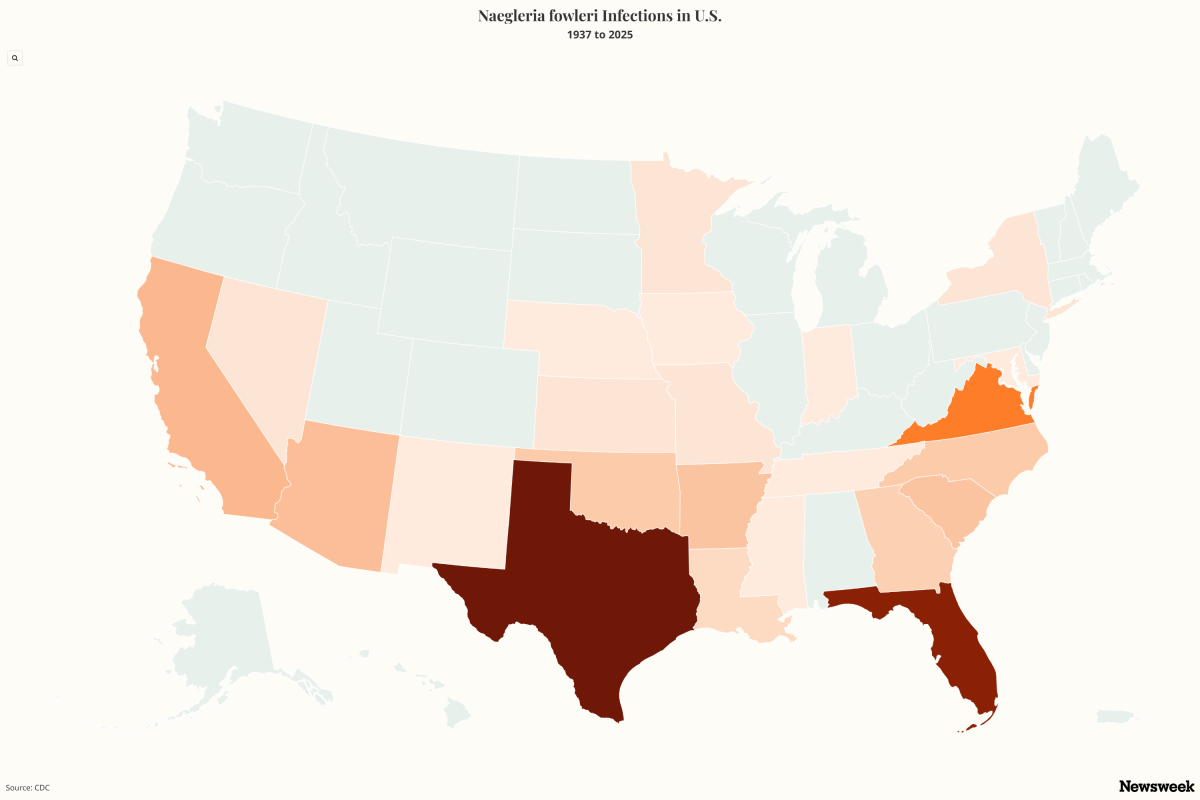
Since 1937, Naegleria fowleri infections have occurred in the following states:
- California
- Nevada
- Arizona
- New Mexico
- Texas
- Oklahoma
- Kansas
- Nebraska
- Minnesota
- Iowa
- Missouri
- Arkansas
- Louisiana
- Mississippi
- Tennessee
- Indiana
- Florida
- Georgia
- South Carolina
- North Carolina
- Virginia
- Maryland
- New York
Texas leads in infections with 40 since 1937, followed by Florida with 37. Virginia has seen the third-most infections at 18.
What happened in the North Carolina case?
The North Carolina Department of Health and Human Services announced the case on August 27, saying the patient is receiving medical care while authorities investigate where the exposure occurred. Officials did not release the patient's identity.
“Our hearts go out to this teen's family, friends and loved ones as they navigate this difficult time,” North Carolina State Epidemiologist Zack Moore said in a press release. “While these infections are very rare, this is an important reminder that this amoeba is present in our state and across the U.S. There are steps people can take to reduce their risk of infection while swimming during the warmer months.”
What are the symptoms of brain-eating amoeba?
Symptoms usually begin with headache, fever, nausea and vomiting before rapidly progressing to more serious neurological complications including seizures, confusion, hallucinations and coma.
How can Iowans protect themselves while swimming?
Naegleria fowleri thrives in warm freshwater, particularly when water temperatures are elevated during summer months or after extended periods of hot weather. The CDC recommends the following precautions for those who swim, wakeboard or participate in other water sports in lakes, ponds, rivers or hot springs:
- Use a nose clip or hold the nose shut when jumping or diving
- Keep the head above water in naturally hot springs
- Avoid water activities during periods of high water temperatures and low water levels
- Refrain from stirring up sediment in shallow freshwater areas where the amoeba is more likely to be found
At home, people should never use tap water for sinus rinses. The organism can also occasionally be found in poorly maintained swimming pools, splash pads and other recreational water venues with inadequate disinfection.
Photo: Newsweek