
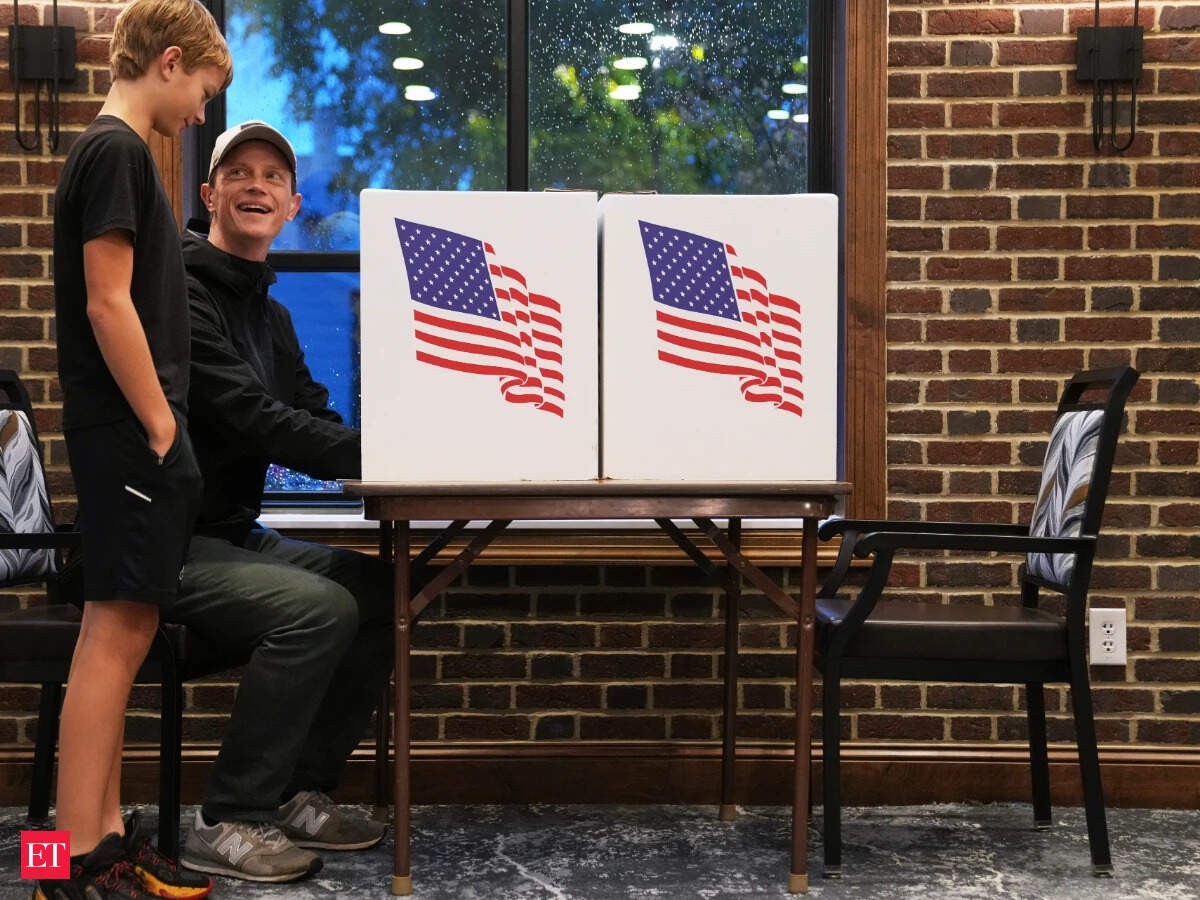
Voters across more than a dozen states headed to the polls Tuesday as Democrats pushed to win a majority of the nation's governors' offices for the first time in two decades, with Iowa's open governor's race drawing national attention as one of the party's top pickup opportunities.
According to the Economic Times, 36 states that are home to about 80% of the U.S. population elected a governor in the 2026 midterms, and the number of competitive races was unusually large, a reflection of President Donald Trump's weak approval ratings weighing on Republican candidates nationwide (report).
Why Iowa Matters in the National Picture
Iowa was among a dozen races viewed as the most competitive nationwide. The Associated Press reported that Democrats saw their best pickup opportunities in Alaska, Georgia, Iowa and Ohio, where incumbents were term-limited, and in Nevada, where Attorney General Aaron Ford challenged Republican Gov. Joe Lombardo (AP News).
Iowa has not elected a Democratic governor since 2006. That fact made the Hawkeye State's open-seat contest a focal point for national Democrats looking to expand their footprint beyond the coasts and into reliably red territory.
The stakes are practical, not just symbolic. Governors oversee election administration in their states, and whoever wins in Iowa and other battlegrounds will hold significant influence over how the 2028 presidential election is run. That matters especially given Trump's push to expand federal control over elections, including restrictions on mail voting, as the Economic Times noted (WAFB).
Democrats Aim to Break a 20-Year Drought
Heading into Election Day, Democratic governors represented 60% of the nation's population, but Republicans held 26 of the 50 governors' offices. Democrats last won a majority of governorships in 2006, flipping six offices in the final midterm under a second-term Republican president. Republicans reclaimed the majority four years later.
Three Democratic governors viewed as possible 2028 presidential contenders all won reelection: Wes Moore of Maryland, JB Pritzker of Illinois and Josh Shapiro of Pennsylvania.
Meghan Meehan-Draper, executive director of the Democratic Governors Association, told The Associated Press:
Our goal is not just the majority of the population, but the majority of states.
PBS NewsHour reported that Democrats were counting on voter discontent over the economy, inflation, healthcare and the future of democracy to carry them to gains nationwide (PBS NewsHour).
Trump's Approval Ratings Weigh on GOP Candidates
In the weeks before Election Day, Trump traveled to heavily Republican areas to headline rallies for GOP gubernatorial candidates seeking a boost. The strategy highlighted a tension for Republicans: the president's poor approval ratings were dragging down his party, yet his rallies remained the most reliable way to energize the base.
The strain showed in Texas, where third-term Republican Gov. Greg Abbott skipped Trump's rally in the state, a sign of the president's unpopularity even in deep red territory. Democratic state Rep. Gina Hinojosa, who was seen as a long shot after emerging from a primary with a fraction of Abbott's war chest, ran a competitive race. In September, fellow Latino politicians asked the Democratic Governors Association for $10 million in aid, arguing Hinojosa had made it close. The DGA gave $1 million, far less than it spent in Arizona, Georgia, Iowa, Michigan, Nevada, Ohio and Wisconsin.
Ohio Ad Draws Bipartisan Backlash
Ohio's race grabbed national headlines for the wrong reasons. Republican Vivek Ramaswamy's campaign produced an ad featuring the estranged mother of Democrat Amy Acton. Acton's mother lost custody of her children decades ago after Acton's stepfather was indicted for raping Acton as a child. The ad drew bipartisan rebukes, including from Ohio Republican Gov. Mike DeWine. Trump praised the ad, and Vice President JD Vance, an Ohioan, defended it.
Where Republicans Hoped to Gain
Republicans' best pickup chance was Kansas, a normally deep red state where Democratic Gov. Laura Kelly was term-limited. The GOP also targeted Wisconsin, where Republican U.S. Rep. Tom Tiffany faced Democrat David Crowley after the Milwaukee County executive narrowly won his primary. Republicans also eyed Michigan's open seat and Oregon, where Democratic Gov. Tina Kotek fended off a second challenge from Republican state Sen. Christine Drazan.
Republicans worked to hold Florida, the nation's third-most populous state, where Republican U.S. Rep. Byron Donalds faced Democrat David Jolly, a former Republican congressman. Control of the executive branch was on the line in all six 2024 swing states: Arizona, Georgia, Michigan, Nevada, Pennsylvania and Wisconsin.
What This Means for Iowa
For Iowa voters, the outcome carries weight beyond the statehouse. The next governor will shape state election administration heading into 2028, and the result will signal whether Iowa remains solidly in the Republican column or joins a broader Democratic shift in the Midwest. Iowa and Ohio were the two red states Democrats hadn't won since 2006, making Tuesday's results a clear measure of the political mood in Trump country.
Frequently Asked Questions
When did Democrats last hold a majority of governors' offices?
Democrats last won a majority of governorships in 2006. Republicans recaptured the majority in 2010.
Why was Iowa's governor's race competitive in 2026?
Iowa's incumbent governor was term-limited, creating an open seat, and national Democrats identified it as one of their best pickup opportunities in a year shaped by Trump's weak approval ratings.
How many states elected a governor in the 2026 midterms?
Thirty-six states, home to about 80% of the U.S. population, elected a governor, and 19 of those seats were open.
When did Iowa last elect a Democratic governor?
Iowa has not elected a Democratic governor since 2006.