
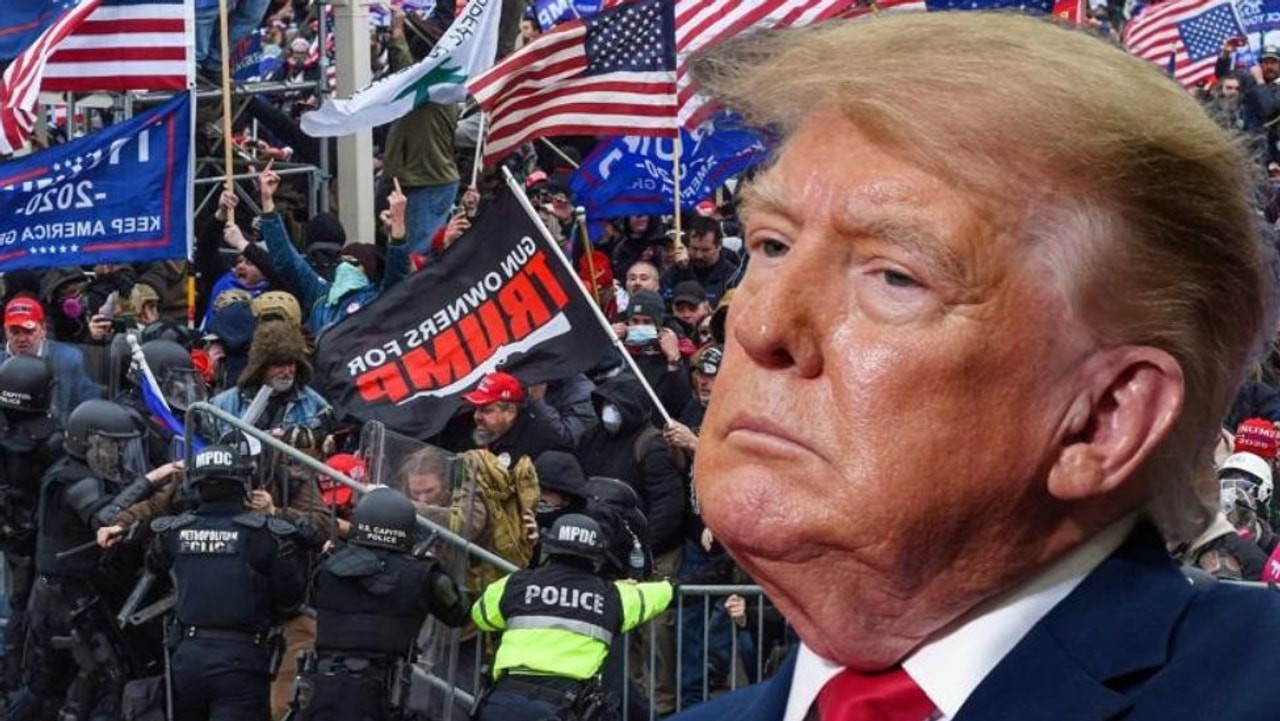
President Donald Trump told an Iowa rally crowd this week that he believes he has a right to seek a third term as president, even while acknowledging that the Constitution appears to stand in his way. The comments, made Friday at the campaign stop, immediately reignited the national debate over the 22nd Amendment and put Iowa back at the center of the 2026 midterm conversation.
According to News.com.au, Trump told supporters he thinks the law blocks another run, but he is not entirely convinced. “I don’t know who’s going to be your next president. And I think the law says, I’m not 100 per cent sure, but I think the law says that I’m not allowed to run again,” Trump said at the rally.
What Trump Told the Iowa Crowd
The President repeated his long-running claim that the 2020 election was stolen from him, telling the Iowa audience, “They rigged the election. They rigged that.” He argued that because he believes he won in 2020, his 2024 victory was effectively his third win, and therefore he has grounds to run again.
“They cheated us on the second one because we won it three times, so I think I have the right to run again,” Trump said, according to the report.
No evidence of systematic vote rigging in 2020 has been presented in the six years since that election, a point News.com.au noted in its coverage. Courts across the country, including judges appointed by Republicans, rejected the legal challenges brought in 2020.
The 22nd Amendment and the Legal Debate
The 22nd Amendment is short and direct: “No person shall be elected to the office of the President more than twice.” Trump was elected as the 45th president in 2016 and as the 47th in 2024.
Trump himself seemed to acknowledge the difficulty at the Iowa event. “I’ve studied that phrase forever,” the 80-year-old president told supporters. “Unfortunately, it’s quite concise. There’s not a lot of wiggle room.”
Some of his allies have floated alternative paths. One argument making the rounds in MAGA circles holds that the amendment bars only consecutive terms, an interpretation most constitutional scholars reject. Others have suggested Trump could run as a vice presidential candidate and then assume the top job if the winning president stepped aside.
“I’d love to run, but the law is very strong,” Trump said in August, according to News.com.au. “Everybody wants me to do it, but the law is very strong.”
Newsweek reported on Trump’s claim that he has a “right” to seek a third term, noting the 22nd Amendment’s plain language limiting presidents to two elections.
Approval Numbers and Midterm Stakes
The rally rhetoric comes as Republicans head into next month’s midterms with the President’s approval rating well below where his party would like it. Trump dismissed a reported 38.8 percent approval figure over the weekend, calling it “fake” and insisting his real standing is far higher among Republican voters, where he cited party polling showing support in the 90s.
Broad national surveys tell a different story. An Ipsos poll conducted about a week ago put his approval at 34 percent. Pew Research came in at 30 percent earlier this month, and a New York Times survey last week also measured 34 percent.
Foreign Policy analyst Michael Hirsch wrote that those numbers have some Republicans worried about a wave similar to the 2006 midterms, when dissatisfaction with President George W. Bush handed Democrats control of both the House and Senate. Democrats need to pick up four seats in each chamber to flip the balance of power.
Trump is not buying the gloomy forecast. “I don’t believe I could be beaten by anybody,” he said at the weekend.
Election Integrity Fight Intensifies Ahead of November
The President has been telling Republican rallies that voters should treat him as if he were on the ballot, and he has been laying the groundwork to contest results he does not like. He has already attacked Alaska’s preferential voting system, calling it a “TOTAL DEMOCRAT SCAM meant to confuse the Voter,” even though ranked choice voting in Alaska was a Republican-backed reform.
His Department of Justice has filed suit demanding that Alaska’s Senate result not be certified unless Republican incumbent Dan Sullivan wins. Attorney General Todd Blanche defended the move as nonpolitical. “He’s the executive,” Blanche said. “He’s supposed to make sure that everything in this country is running right.”
The administration has also taken several high-profile actions against political opponents in recent weeks, including revived accusations against former CIA director John Brennan and former FBI director James Comey, an FBI raid on Minnesota Rep. Ilhan Omar’s home over alleged immigration fraud, and a lawsuit seeking to block 20,000 California voters the DOJ claims are not valid citizens.
An Ipsos poll last week found that 79 percent of U.S. voters are not confident Trump would accept an unfavorable election outcome. Only 28 percent believed he would.
USA Today’s opinion desk argued that if Republicans lose the House, Trump will almost certainly claim the midterms were rigged, and it pressed GOP leaders to be ready to speak up. MS Now reported that Democrats are already preparing for the possibility that Trump tries to disrupt voting on Election Day itself.
Would a Third Term Bid Hold Up?
Democrat strategist Dmitri Mehlhorn told U.S. media that if Trump demanded the Republican nomination, the party would almost certainly go along. The question would then fall to the Supreme Court, and Mehlhorn said he doubts the justices would disqualify a major party nominee.
“They would say it’s a political question. They would say it’s up to the voters,” Mehlhorn said. “I don’t see anyone who could enforce it at that point.”
For now, the President insists his focus is on next month’s midterms. But his Iowa appearance made clear the third-term talk is not going away, and Iowa Republicans can expect to hear plenty more of it between now and November.