
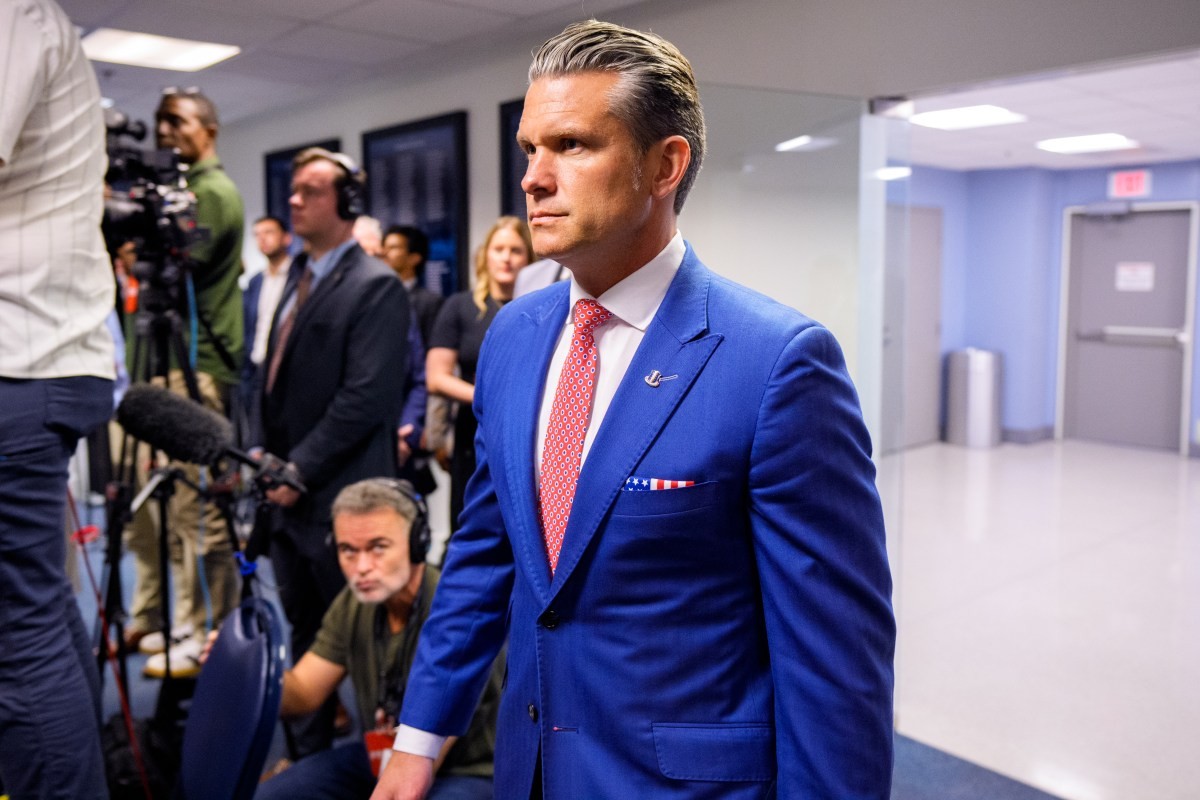
Defense Secretary Pete Hegseth has flatly denied reports that he is considering a run for president in 2028, calling the claim “100% false” after NBC News published a story suggesting he had discussed a potential campaign with close friends and associates. Hegseth took to X to push back, writing, “My only job: Make @DeptofWar Great Again.”
The denial comes as speculation over the 2028 Republican presidential field intensifies, with several members of President Donald Trump’s administration already being floated as potential candidates. Vice President JD Vance and Secretary of State Marco Rubio have emerged as the most prominent names, while Donald Trump Jr. and Florida Governor Ron DeSantis have also been mentioned as possible contenders.
What the NBC report claimed
According to NBC News, citing two people familiar with the conversations, Hegseth has told close friends and associates that he is considering a potential run in 2028. The report said Hegseth and his wife, Jennifer, have discussed the possibility for months, believing his toughness, conservative views, and appeal among Trump’s MAGA base could translate into a successful presidential campaign.
The report also pointed to Hegseth’s recent appearance at the Iowa State Fair, where he campaigned for Republican Representative Zach Nunn. Given Iowa’s longstanding role as an early presidential battleground, that appearance fueled additional speculation.
Pentagon pushes back
Hegseth’s allies were quick to dismiss the story. Chief Pentagon spokesman Sean Parnell told Newsweek Friday night, “Secretary Hegseth is not running for President, and his main priority is leading the War Department. All other speculation is foolish.” White House spokeswoman Anna Kelly also praised Hegseth’s work under Trump, according to NBC News.
Still, Hegseth has increasingly appeared on the campaign trail ahead of the 2026 midterms, including a May trip to Kentucky to campaign against Republican Representative Thomas Massie.
Challenges facing a potential Hegseth campaign
A 2028 campaign would not come without hurdles. The ongoing war in Iran remains unpopular with Americans, and gasoline prices continue averaging more than $4 per gallon. Hegseth was also at the center of the so-called Signalgate controversy, involving conversations about planned military strikes on Yemen that were held on the messaging app Signal. The NBC report noted these issues as potential liabilities.
Trump’s continued influence over the Republican Party is another major factor, particularly as the president has talked up potential successors.
What 2028 polls show
Early polling suggests Hegseth would face an uphill battle compared with the leading Republican contenders. A Conservative Political Action Conference (CPAC) straw poll conducted earlier this year showed Vance with 53 percent support among attendees, compared with 35 percent for Rubio. Hegseth landed at just 1 percent, with 3 percent undecided. The survey was conducted from March 25 to March 28 among 1,630 CPAC attendees.
National polling tells a similar story. An Echelon Insights poll shows Vance leading the pack with 39 percent, followed by Rubio at 22 percent, DeSantis at 10 percent, Trump Jr. at 8 percent, and Health and Human Services Secretary Robert F. Kennedy Jr. at 3 percent. That poll was conducted from August 13 to August 17 among 1,002 likely voters, with a margin of error of 3.4 percent.
An Emerson College Polling survey from July shows Vance with 39 percent and Rubio close behind at 38 percent, with DeSantis at 5 percent and 9 percent undecided. That poll surveyed 1,100 likely voters on July 19 and July 20, with a credibility interval of 2.9 percent.
What happens next
Hegseth’s denial does not necessarily end speculation about his political future. With the 2028 election still more than two years away, the field, and the polling, could shift substantially before voters begin making their choices. For now, Hegseth appears focused on his current role, but Iowa voters will likely keep a close eye on any future visits from the defense secretary.