
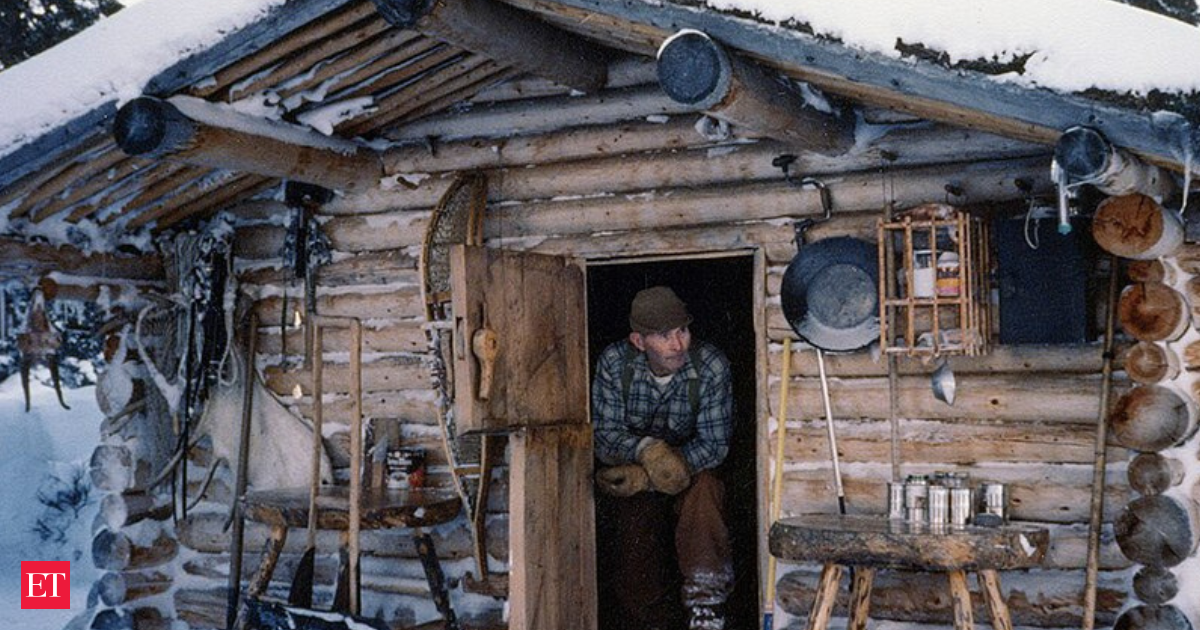
Before the age of smartphones and constant notifications, Richard “Dick” Proenneke, a diesel mechanic from Primrose, Iowa, traded modern convenience for a hand-built log cabin in the remote Alaskan wilderness. For over 30 years, he lived alone at Twin Lakes, surviving on his own skills and leaving behind a legacy that now belongs to the National Park Service. His story is a testament to independence, self-reliance, and the enduring appeal of a simpler life.
Who was Richard Proenneke, and why did he leave Iowa for Alaska?
Born in Primrose, Iowa, in 1916, Proenneke served in the U.S. Navy during World War II before becoming a diesel mechanic. He worked odd jobs in Alaska and Oregon, including salmon fishing and ranching, saving money for retirement. In 1962, he visited friends at their cabin in Twin Lakes, Alaska, and returned every summer. After an eye injury in the late 1960s threatened his eyesight, Proenneke decided to settle in the wilderness before it was too late. At age 51, he scouted a plot near his friends’ cabin and began building his dream home.
How did a mechanic build a cabin with no nails?
Proenneke had no formal training in wilderness living, but his mechanical background proved invaluable. He cut spruce logs by hand in the summer of 1967 and began construction in 1968. The 12x16-foot cabin was made of peeled spruce logs fitted together without a single nail. He crafted his own tools, including a Dutch door with wooden hinges, and built a raised log cache to protect food from bears and rodents. The construction was filmed on an old movie camera, which later became the basis for the 1977 documentary “One Man’s Alaska,” still available for free through the National Archives.
What did Proenneke’s daily life look like in the wilderness?
Proenneke hunted, fished, and grew what food he could, with occasional supply flights. He kept a journal, recording weather patterns and animal behavior. Despite his isolation, he answered letters and welcomed visitors who made the trek to Twin Lakes. His journals, which he and his brother donated to the National Park Service in 2000, weigh nearly 90 pounds and span 255 volumes, offering a detailed record of his life and the natural world around him.
What can modern Iowans learn from Proenneke’s story?
Proenneke’s story resonates today, especially as studies show the benefits of time in nature. A University of Michigan study found that just 20 to 30 minutes in a natural setting can significantly reduce cortisol, the body’s main stress hormone. Meanwhile, Deloitte’s 2025 Gen Z and Millennial Survey found that 40% of Gen Z and 34% of millennials feel stressed all or most of the time, often due to work. Proenneke’s life offers an extreme example of what many crave: fewer distractions and more direct contact with the real world.
What happened to Proenneke’s cabin after he left?
Proenneke lived at Twin Lakes for over 30 years before leaving in 1999. He made a final visit in 2000 at age 84, then moved to California to be closer to family. He died in 2003 and willed his cabin to the National Park Service. Today, the cabin is part of Lake Clark National Park and Preserve, where visitors can walk through the same handmade door Proenneke carved. He left behind no fortune, but his legacy of self-reliance and connection to nature endures.
Why does Proenneke’s story matter to Iowa?
Proenneke’s roots in Iowa remind us of the state’s values of hard work, independence, and stewardship. His story is a powerful example of what one person can achieve with determination and skill. For Iowans who value self-reliance and the outdoors, Proenneke’s life is an inspiration. His cabin stands as a monument to a simpler way of life, and his journals offer a window into a world that is increasingly rare.
Proenneke’s story is not just about survival; it’s about thriving with less. In an age of constant connectivity, his choice to live alone in the wilderness challenges us to consider what we truly need. For those who make the journey to Twin Lakes, the cabin is a reminder that sometimes the most meaningful legacies are built log by log, with one’s own hands.