
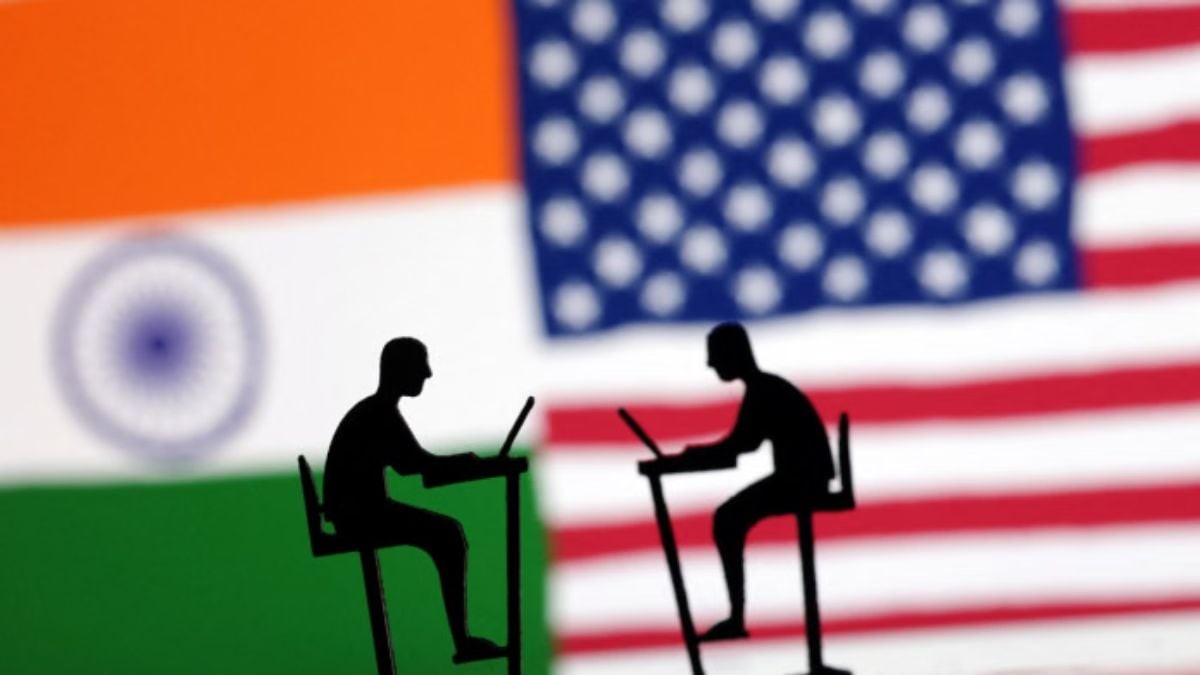
Essar Group's U.S. subsidiary Mesabi Metallics has announced plans for a $15 billion steel mill in Iowa, the single largest investment commitment in a quarter that saw American and Indian companies push forward on manufacturing, defense, and technology despite ongoing trade friction between Washington and New Delhi.
The announcement, reported by ThePrint as part of its quarterly tracker of U.S.-India trade and business ties, anchors a wave of disclosed investment commitments and funding rounds that reached $20.45 billion in total, with capital moving in both directions. Mesabi's Iowa plan and Applied Materials' $5 billion semiconductor commitment in India account for nearly all of that figure, and both represent planned rather than completed investment.
What the Iowa Steel Mill Announcement Means
For Iowa, the headline number is the big one: a $15 billion facility that would rank among the largest industrial projects ever proposed in the state. Details on siting, timeline, and hiring were not disclosed in the report, and the commitment remains a plan rather than a shovel-ready project.
The announcement fits a broader pattern of strengthening domestic steel production under President Donald Trump's trade agenda. American steelmakers have credited the administration's tariff policy with reviving the sector, as Cleveland-Cliffs recently posted its strongest quarter in three years and pointed directly at Trump trade policy. A $15 billion Indian-backed mill on American soil would extend that trend and deepen industrial ties between the two countries at the company level, even while their governments continue to negotiate.
Companies Are Building While Governments Negotiate
ThePrint's tracker recorded 13 industry agreements and licenses between U.S. and Indian firms during the quarter, compared with four defense procurement milestones. India signed a $45.7 million Javelin anti-tank missile purchase and a $204.5 million lease of two MQ-9B SeaGuardian drones. Weeks after the Javelin purchase, Tata Advanced Systems and the Lockheed Martin-Raytheon Javelin Joint Venture signed a memorandum of understanding to explore production in India.
Hindustan Aeronautics Limited reported progress on the proposed co-production of 99 GE F414 engines, while Honeywell licensed GMR Aero Technic to maintain components on LEAP engines. Boeing Defence India partnered with Merlinhawk Aerospace to sustain sensors on Indian platforms, including the P-8I.
India's procurement rules are shaping those arrangements. The Defence Acquisition Council's September approvals envision sourcing roughly 98 percent of the value from Indian industry, which pushes U.S. manufacturers toward local partners. Tata is competing with Lockheed Martin's C-130J for India's transport aircraft requirement, while Mahindra has paired with Embraer's C-390.
Trade Tension Remains the Backdrop
The same quarter recorded nine trade measures and six sanctions and export-control developments. On July 13, India prohibited imports produced using forced labor. Washington then imposed an additional 10 percent Section 301 tariff on Indian goods under its forced-labor investigation, down from a proposed 12.5 percent rate. Indian officials said roughly 45 percent of the country's exports to the U.S. remain exempt.
New U.S. drone tariffs excluded India from preferential rates, and three named Indian solar manufacturers plus their primary international trading partner, Japan's Kowa Company Ltd., face a 107.17 percent cash-deposit rate pending a final injury ruling from U.S. trade investigations.
The most consequential development came on September 18, when President Trump signed the Lindsey O. Graham Sanctioning Russia and Iran Act of 2026 with bipartisan support. The law authorizes tariffs of up to 100 percent on major buyers of Russian oil and gas, subject to presidential waiver authority. India was not named but remains potentially exposed as a major purchaser of Russian crude.
Analysts writing for Drishti IAS argue that sustaining the U.S.-India strategic alignment will require institutionalized mechanisms to resolve trade, crude oil, and immigration friction while respecting India's strategic autonomy. Commerce Minister Piyush Goyal met with U.S. Trade Representative Jamieson Greer toward the quarter's close, a sign both sides want a deal even as the terms stay unsettled.
Space, Semiconductors, and Smaller Bets
On October 2, four Indian startups reached orbit aboard SpaceX's Transporter-18 mission, one carrying NVIDIA computing hardware that lets customers, including a U.S.-based customer, run AI models on imagery in orbit. Microchip Technology signed an agreement with Kaynes Semicon and GridCrest Technologies on an India-based semiconductor initiative, and Silvaco agreed to provide design tools through C-DAC.
In defense investing, U.S. firms placed smaller but telling bets on Indian aerospace. Carlyle agreed to acquire 60 percent of Micropack in a reported $124 million transaction, Norwest co-led Raghu Vamsi Aerospace Group's $40 million Series B, and Greenoaks led drone maker Airbound's $37 million Series A.
India also issued draft SHANTI rules addressing supplier-liability concerns that have hindered foreign reactor projects and U.S.-India nuclear cooperation since the original nuclear deal.
Why It Matters for Iowans
The Mesabi announcement puts Iowa at the center of a relationship that Washington and New Delhi have not finished defining. If the $15 billion mill moves forward, it would mean construction jobs, permanent steelmaking jobs, and a major addition to a domestic industrial base that Trump's trade policy is explicitly trying to rebuild.
ThePrint's conclusion cuts against the pessimism in some quarters: while the trade relationship remains unsettled and not every announced partnership will materialize, companies on both sides are not waiting for a deal to build together.
Frequently Asked Questions
Who is planning the $15 billion steel mill in Iowa?
Mesabi Metallics, the U.S. subsidiary of India's Essar Group, announced the plan. The commitment is planned rather than completed investment, according to ThePrint's quarterly tracker.
How large were total U.S.-India investment commitments in the quarter?
Disclosed commitments and funding rounds reached $20.45 billion, with Mesabi's Iowa mill and Applied Materials' $5 billion India semiconductor plan accounting for nearly 98 percent of the total.
What new tariff law could affect India?
The Lindsey O. Graham Sanctioning Russia and Iran Act of 2026, signed by President Trump on September 18, authorizes tariffs of up to 100 percent on major buyers of Russian oil and gas, subject to presidential waivers. India was not named but could be exposed.