
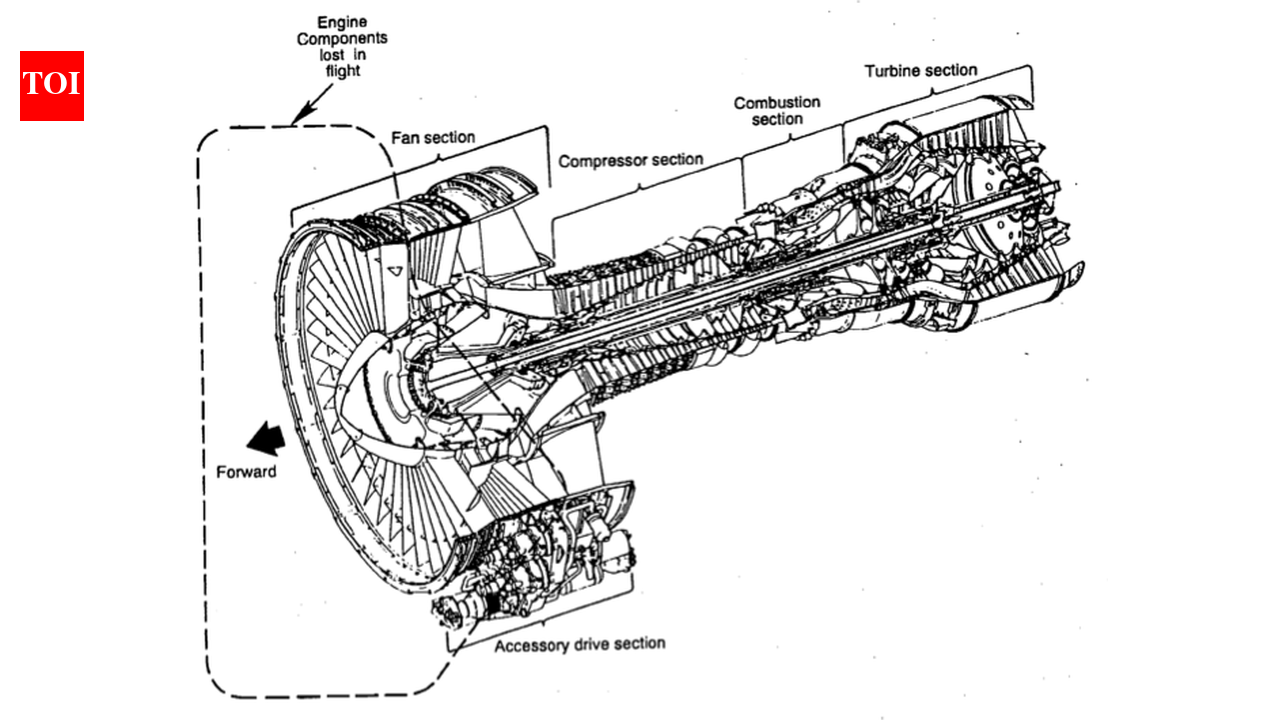
In October 1989, an Iowa farmer combining corn near Alta struck a buried piece of titanium that turned out to be the missing fan disk from United Airlines Flight 232, the DC-10 that crash-landed in Sioux City three months earlier, killing 111 of the 296 people aboard. The discovery earned Janice Sorenson and her husband, Dale, a $116,000 reward from General Electric and handed federal investigators the single piece of evidence they had spent months searching for.
The story of the Sorensons' find, first reported by The New York Times and recently revisited by The Times of India, remains one of the most remarkable chapters in Iowa's history, tying a Buena Vista County farm family to one of the most studied airline disasters in American aviation.
The crash that stunned Sioux City
Flight 232, a regularly scheduled United Airlines flight from Denver to Chicago with a continuation to Philadelphia, lost all three of its independent hydraulic systems on July 19, 1989, after an engine failed in flight. As Wikipedia's account of the flight notes, the McDonnell Douglas DC-10's crew fought to control the aircraft using engine thrust alone before the crash landing at Sioux Gateway Airport.
Investigators suspected almost immediately that the engine failure had severed the hydraulic lines, but they could not confirm it without the engine's titanium fan disk. The part had vanished somewhere in the Iowa countryside, and General Electric, which built the engine, posted a total of $271,000 in rewards for the return of missing engine components, including $50,000 for the fan disk alone, according to an October 13, 1989 report in the Los Angeles Times.
The combine strike near Alta
Janice Sorenson was harvesting corn on her family's farm, roughly 10 miles north of Alta, when her combine hit the buried object. GE had circulated photographs of the missing disk, so she recognized it on sight, climbed down from the machine, and stopped harvesting to confirm what she had found.
Once the details checked out, she called Jerry Clark, a GE safety investigator who had been working with authorities on the search. The disk was not the only piece recovered from the area. A neighbor, Harold Halverson, found the remainder of the component about half a mile away in his own cornfield.
Recalling the moment to The New York Times, Janice kept her reaction plain.
I think I was in shock.
She told the paper the discovery left her tearful, thinking of the people who had died rather than of any reward money. Inkl's report on the find notes that the couple's payment exceeded the $50,000 base offer because investigators considered the disk the key piece of evidence in the case.
What the disk told metallurgists
For investigators, the recovery ended a long wait to examine the component and determine how the engine had disintegrated in flight. On October 23, 1989, TIME reported that metallurgists who inspected the disk found a crack that appeared to have been present since the part was first manufactured.
The finding pointed toward a possible mechanical cause of the engine failure, though investigators stressed it was a preliminary conclusion rather than a final answer. The engine failure had left the pilots without the hydraulic systems needed to control the aircraft normally, which contributed to the circumstances of the crash landing.
For the Sorensons, the timing mattered
The reward arrived during a difficult stretch for the farm family. Janice and Dale had recently sold a service station investment that never turned a profit. Before the sale closed, they had to excavate and dispose of contaminated soil around old petroleum storage tanks, and those expenses wiped out any chance of a financial return.
The couple had married at 19 and 21 and returned to her parents' farm after Dale's Army service in the Korean War. By 1989 they were still living in the farmhouse where Janice and her father had been born, raising corn and soybeans, cattle and turkeys, with Dale also working off the farm to make ends meet.
Why the story still resonates in Iowa
The Flight 232 investigation became a landmark case in aviation safety, and the disk Janice Sorenson pulled from a Buena Vista County cornfield was the evidence that made the final findings possible. The crash also cemented Sioux City's place in aviation history, in no small part because of the skill of the crew and the emergency response that saved 185 lives on the ground and in the wreckage.
For Iowa readers, the story is a reminder that some of the most consequential moments in state history have happened in the middle of a harvest, when ordinary farm work intersects with events far beyond the fence line.
Frequently asked questions
What did Janice Sorenson find in her cornfield?
She found the titanium fan disk from the engine of United Airlines Flight 232, which crash-landed in Sioux City on July 19, 1989, after striking it with her combine while harvesting corn near Alta.
How much was the reward for the Flight 232 fan disk?
General Electric offered $50,000 for the fan disk itself, but the Sorensons received $116,000 because investigators considered the disk the most important piece of evidence in the crash probe.
What caused the engine failure on Flight 232?
Metallurgists who examined the recovered disk found a crack that appeared to date back to the part's manufacture, a preliminary finding that pointed to a mechanical cause of the engine failure and the loss of the aircraft's hydraulic systems.