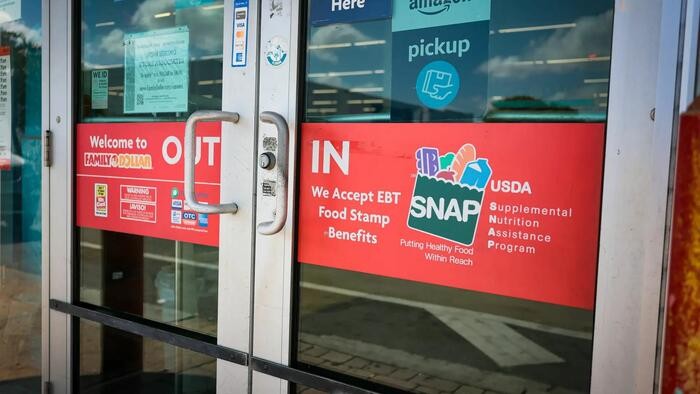
Iowa stands out as one of only nine states that kept food stamp payment errors below the new federal threshold, avoiding costly penalties set to take effect in October 2027. The state's strong performance puts it ahead of the curve as 41 states and the District of Columbia face potential financial consequences under the One Big Beautiful Bill Act.
Under the new rules, states with SNAP payment error rates of 6 percent or higher must cover 5, 10, or 15 percent of benefit costs, depending on how far they exceed the threshold. Nearly half of all states will owe more than $100 million in penalties based on 2025 data, according to the Department of Agriculture.
What the new SNAP penalties mean for Iowa
Iowa's error rate fell below 6 percent in fiscal 2025, meaning the state avoids the cost-sharing requirement entirely. That puts Iowa in a strong position compared to states like California, New York, and Florida, which would each face more than $1 billion in SNAP costs if they fail to reduce errors.
Texas would owe around $750 million under the same scenario.
The tighter rules address a long-standing problem: states administer SNAP and process applications, but federal taxpayers have historically absorbed the financial hit from mistakes. That created little incentive for states to crack down on waste, according to the Cato Institute.
SNAP payment errors totaled more than $10 billion in 2025, with over 87 percent of that coming from overpayments.
Why SNAP error rates matter for taxpayers
SNAP is a federally funded program run by the states. In 2025, federal taxpayers spent about $103 billion on benefits and nearly $7 billion in administrative costs. With an overall error rate of 10.6 percent, nearly one in nine food stamp allotments went to an ineligible recipient or was paid in the wrong amount.
The Government Accountability Office found that state agencies often failed to verify eligibility criteria like citizenship, employment, finances, identity, residency, and household size before issuing payments.
Agriculture Secretary Brooke Rollins called the errors proof that “state accountability is severely lacking in SNAP.”
Enrollment drops as fraud crackdown takes effect
Since the One Big Beautiful Bill Act took effect in July 2025, SNAP participation has dropped by more than 5 million recipients, a 12 percent decline to 37 million as of April. Rollins attributed the drop to the administration's crackdown on fraud and ineligible recipients.
The downward trend may continue, with 11 states reporting they could narrow eligibility policies when costs change.
How states are responding to the new rules
States are taking different approaches to reduce errors and avoid penalties.
- Virginia, facing 15 percent cost-sharing, has stopped allowing applicants to self-report expenses and incomes.
- Louisiana is offering a $1,500 bonus to staff who keep error rates at 4 percent or lower.
- Mississippi is updating its 35-year-old eligibility systems.
- Minnesota is investing millions to modernize decades-old technology.
A July survey from the American Public Human Services Association found that agencies across the country are “working incredibly hard” to reduce error rates by addressing root causes, including workforce training and technology upgrades.
However, the survey also noted trade-offs, including slower benefit payments and delays in EBT chip card implementation. Four states indicated they may drop out of SNAP altogether.
The 'Alaska Carveout' controversy
A provision in the budget bill delays cost-sharing for two years for states with error rates of 13.34 percent or higher in fiscal 2025. That includes Alaska, New Mexico, Delaware, Georgia, Illinois, and Oregon.
The provision, secured by Sen. Lisa Murkowski (R-Alaska), has drawn criticism from the Cato Institute for potentially rewarding the worst-performing states while penalizing those that improved.
Data sharing push to fight fraud
The Trump administration is pushing to codify data sharing between states and the federal government to root out fraud and waste.
“We need to know where your tax dollars are going, and if the state of California and the state of New York aren't going to tell us, we need Congress to force them to tell us,” Vice President JD Vance said at a fraud task force roundtable on Aug. 5.
Stephen Miller, White House deputy chief of staff for policy, said technological verification and data-sharing measures can solve the majority of integrity problems in government programs.
What Iowa's low error rate means going forward
Iowa's position below the 6 percent threshold reflects effective administration of the SNAP program. With the state also set to bear 75 percent of administrative costs starting this October, up from 50 percent since 1964, maintaining accuracy will be crucial for Iowa's budget.
As other states scramble to fix their systems, Iowa's example shows that careful oversight and verification can keep programs both efficient and accountable to taxpayers.