
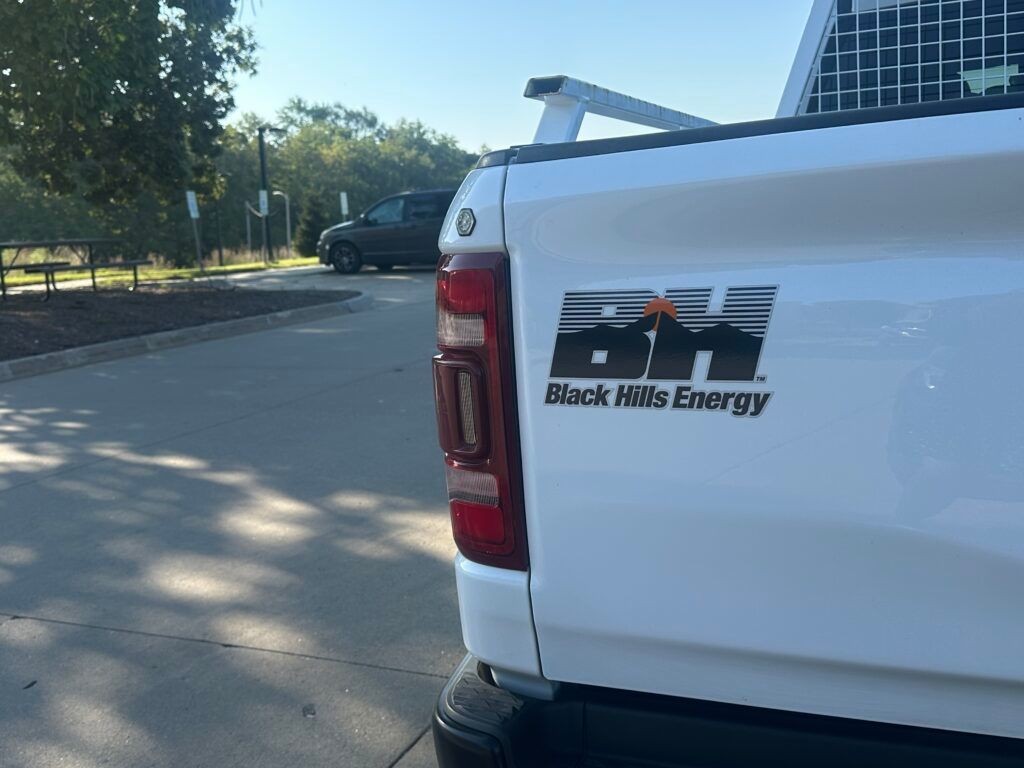
Iowa regulators are considering civil penalties against Black Hills Energy after an investigation revealed the natural gas utility has a disproportionately high number of pipeline safety violations compared to other major providers in the state.
The Iowa Utilities Commission (IUC) held a hearing Thursday to evaluate potential corrective actions and fines for Black Hills, which serves customers across Iowa. The investigation stems from routine inspections that found the company had significantly more probable violations than Interstate Power and Light Company or MidAmerican Energy Company over the past several years.
What did the IUC investigation find?
In June 2025, the IUC submitted a routine inspection report on Black Hills' Spencer Unit in northwest Iowa that identified more than 100 safety issues across 16 violation categories. While the violations did not pose an immediate threat to the public, the high volume triggered a broader investigation into the company's operations statewide.
As regulators reviewed additional data from other Black Hills operations, they said they became increasingly concerned about potential company-wide safety issues. An IUC chart showed that when scaled to violations per 1,000 service lines between 2023 and 2025, Black Hills' violation rate was nearly three times that of MidAmerican or IPL.
Black Hills is the smallest of Iowa's three major natural gas utilities, operating just under 3,000 miles of main pipe compared to more than 4,500 miles for IPL and more than 11,000 miles for MidAmerican.
Black Hills responds to safety concerns
Pete Hamell, general manager for Black Hills Energy Iowa Gas, acknowledged the high number of probable violations but said the nature of the observations is not alarming.
We have alignment with the commission that the safe, reliable, and affordable delivery of gas service to our customers in all of our communities is a shared responsibility and priority for us, Hamell said. We take the commission's observations and partnership to heart.
Hamell said many of the flagged violations were related to environmental factors, homeowner damage from landscaping projects, or regulatory changes. He attributed many findings to oxidation of pipes over time, which he said is not necessarily bad for pipelines.
That explanation drew questions from Commissioner Joshua Byrnes, who noted that IUC inspectors appear to see corrosion while Black Hills technicians see oxidation.
How do we get to a point where we're all seeing the same thing? Byrnes asked.
Matt Mangin, a senior specialist at Black Hills overseeing corrosion control, said the two agencies would need equal training to properly distinguish between oxidation and corrosion.
How slow are Black Hills' correction times?
The IUC also presented data comparing correction times among utilities from 2023 through 2025. While MidAmerican and IPL averaged about 30 days to correct issues, Black Hills averaged 132 days.
Hamell said certain projects take longer due to engineering and permitting requirements, but maintained that Black Hills' response times have not exceeded federal standards set by the U.S. Pipeline and Hazardous Materials Safety Administration.
In its June 29 order, the IUC noted that Black Hills closed violations from the Spencer audit faster than those found elsewhere in its system, and questioned why that response time has not been replicated across other Iowa operations.
What happens next for Black Hills Energy?
The IUC deferred its final decision on civil penalties until it could evaluate compliance standards across Black Hills' entire Iowa system. Black Hills has argued that civil penalties are not warranted, saying its corrective action plan provides a more effective path forward.
Kevin Jarosz, vice president of Black Hills' Iowa and Nebraska gas operations, told commissioners that safety is the company's highest priority.
We firmly commit safety to our employees, our customers, and communities that we serve, and we also commit to a strong compliance program, investment in our infrastructure, and continuously improving where we need to, Jarosz said.
The Iowa Utilities Commission will review testimony and written responses to determine applicable civil penalties and corrective actions. Iowa ratepayers and communities served by Black Hills Energy should monitor the commission's decision, which could impact how the utility addresses safety compliance moving forward.