
NASCAR announced on Wednesday that Cup Series teams can replace front brake pads and rotors after practice and qualifying at Phoenix Raceway this weekend, a rule change prompted by a string of brake failures that wrecked several championship contenders at Gateway last month.
The allowance, first reported by The BRAKE Report, has no fixed limit on the number of front-brake changes. It does not extend to other components of the braking system, and rear rotors will be handled case by case during Sunday's pre-race adjustments.
Why NASCAR made the change
The decision follows a brutal September 13 afternoon at World Wide Technology Raceway, where brake failures took out multiple Chase contenders through no fault of their own. Ryan Blaney was running sixth on Lap 155 when his right-front brake rotor exploded through the hood of his No. 12 Ford. He steered the car into the outside wall to scrub off speed and finished 35th. Zane Smith had already crashed hard on Lap 131 after an apparent brake failure.
Chase Elliott lost braking entering Turn 1 on Lap 214, spun across Chase Briscoe's Toyota and put both cars into the SAFER barrier. Chris Buescher retired in 27th with a brake failure near the finish. The race featured 18 cautions and two overtime restarts, but the brake failures stung most because they removed drivers from the title fight without a normal on-track battle.
Cliff Daniels: 'Fresh stuff' for Kyle Larson's No. 5
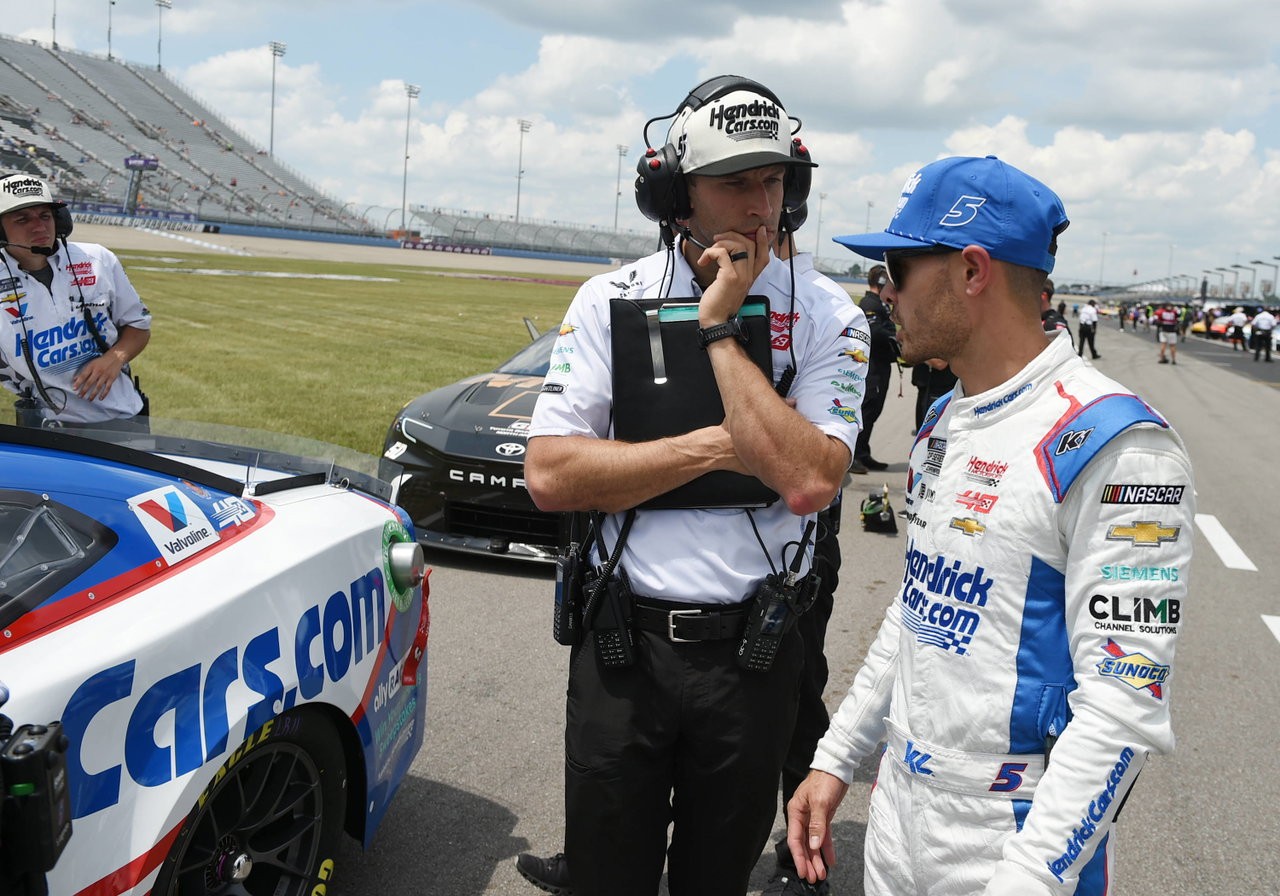
For Cliff Daniels, crew chief on Kyle Larson's No. 5 Hendrick Motorsports Chevrolet, the change is a welcome return to common sense. Speaking on SiriusXM NASCAR Radio, Daniels said the opportunity to start Sunday's race with new components removes a question mark every team has been carrying.
“I think it's smart. I think it's manageable, and for us, it's just the opportunity to put fresh stuff on there,” Daniels said. “Our, call it fast short-track brake package, has been pretty consistent for a while for us.”
Daniels said knowing the car starts with maximum braking durability matters most, since the setup “has been a question mark for everybody.”
He also traced the problem to the weekend format itself. Before impound-style weekends became standard at short tracks, teams routinely changed brakes after practice. Since COVID, impound rules have limited what crews can touch, even as NASCAR added track time and horsepower.
“Teams would always change their brakes after practice, going into a race. That was very common,” Daniels said. “When you take an impound-style format, and you add a little bit more practice time, it is that much more wear and tear on your personal equipment, so I appreciate the move from NASCAR.”
More horsepower means more braking demand
Phoenix adds its own pressure. NASCAR moved tracks shorter than 1.5 miles to a 750-horsepower package for 2026, up from the 670 baseline, according to EssentiallySports. The added power and lower-downforce configuration mean repeated heavy braking into the corners, and Phoenix was the first traditional oval to run the package back in March, a race Blaney won.
NASCAR's combined-group practice sessions now give teams 50 minutes of track time instead of two separate 25-minute sessions. More running before the race means more wear on parts teams previously could not replace.
Jonathan Hassler, a fellow crew chief, told The BRAKE Report that Gateway “has always been a place that's tough on brakes” and that teams knew the higher-horsepower package added demand.
The Iowa connection
The brake problem is familiar to anyone who followed NASCAR's stop in the Hawkeye State this season. During the August 9 race at Iowa Speedway, Denny Hamlin fought a brake issue that turned his day into a management exercise rather than a race, and he discussed the limits teams face on his Actions Detrimental podcast.
According to Autoweek, Hamlin's Joe Gibbs Racing teammate Chase Briscoe also had brake trouble in practice at Iowa. NASCAR allowed crews to change the rotors but not the brake pads that weekend, and the problems carried into the race itself.
Hamlin's Iowa weekend included a separate penalty, as his No. 11 Toyota was sent to the rear for unapproved adjustments. The two issues were unrelated, but together they showed how tight the rules can get when a car needs work and the rulebook restricts the options. Hamlin still drove to a fifth-place finish despite the braking concerns.
What the Phoenix allowance does and does not do
The new allowance gives crews a defined window to replace two critical components without giving up their starting spots. It does not eliminate the risk of mechanical failure, and it does not open the rest of the braking system to unrestricted changes.
Yahoo Sports reported that the change also frees up setup strategy, since a crew chief can run a more aggressive brake-cooling compromise in qualifying without betting the whole race on that choice holding up for 300-plus miles.
If the procedure works at Phoenix, NASCAR may have reason to consider similar allowances at other short tracks. For now, teams head into Sunday with one less uncertainty to manage before the green flag.
Frequently Asked Questions
What brake parts can Cup teams replace at Phoenix?
Teams can replace front brake pads and front rotors after Saturday's practice and qualifying, with no fixed limit on changes. Rear rotors and other brake components are not covered and will be handled case by case.
Why did NASCAR allow the brake changes now?
A series of brake failures at Gateway on September 13 knocked Ryan Blaney, Chase Elliott, Chase Briscoe and Chris Buescher out of contention, raising safety concerns during the Chase.
Did Denny Hamlin have brake problems at Iowa Speedway?
Yes. Hamlin dealt with a brake issue during the August 9 race at Iowa and finished fifth despite the problem and a separate penalty that sent his car to the rear of the field.