
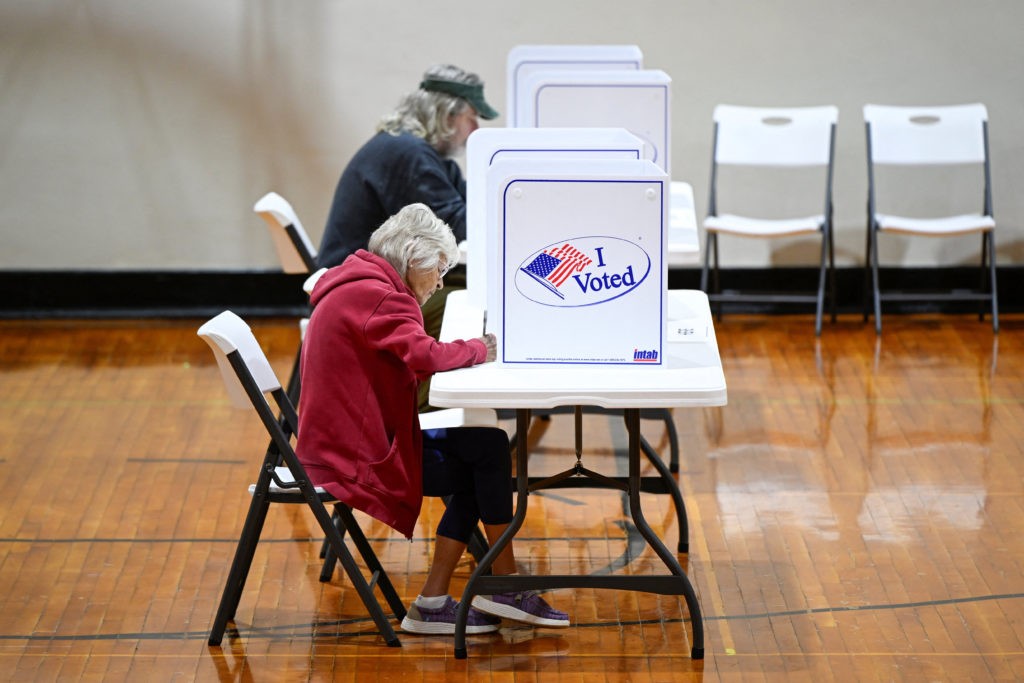
Iowa voters chose Democrat Rob Sand as the state's next governor on Tuesday, November 4, 2026, defeating Republican Zach Lahn and ending more than two decades of Republican control of the governor's office.
Sand, who currently serves as state auditor and has been the only Democrat holding statewide elected office in Iowa, will take over from retiring Gov. Kim Reynolds in January. With Republicans expected to keep their majorities in the state House and Senate, Iowans are looking at four years of divided government in Des Moines.
What happened in the Iowa governor's race
Sand defeated Lahn, a first-time candidate who shocked members of his own party by winning the Republican primary in June. Lahn had just five months after that primary to introduce himself to voters, build a campaign staff and raise money, according to PBS.org's election coverage.
The race was the first governor's contest in Iowa without an incumbent since 2010, opened by Reynolds' unexpected retirement announcement. NBC News projected Sand as the winner, noting he is the first Democrat elected to the office in 20 years.
NPR reported that Sand's win ends GOP control of the office and that he has spoken about how his Christian faith guides him during the campaign.
Who is Rob Sand?
Sand, 44, has built his political brand on keeping distance from his own party. He often laments a political system that forces people to pick sides, even though he has only run for office as a Democrat and has donated substantially to the party. He campaigned on his small-town northeast Iowa upbringing, his years as a state prosecutor, and annual town halls in all 99 counties.
He won his last race for auditor by fewer than 3,000 votes, but he has consistently outperformed other Democrats statewide, especially in rural counties. That rural appeal proved decisive in a state where registered Republicans outnumber Democrats and where voters backed President Donald Trump just two years ago.
During the campaign, Sand criticized Republicans for a worsening budget deficit he tied to their tax cuts and the education savings account program, which provides students with public dollars to pay for private school tuition. He said he would act as a check on Republican efforts to push culture war bills and argued divided government would be good for solving problems.
Zach Lahn's unconventional GOP campaign
Lahn won a five-way Republican primary with only about a third of the vote, edging out U.S. Rep. Randy Feenstra, who had President Trump's endorsement, by less than a percentage point.
Lahn was not shy about breaking from traditional Iowa GOP positions. He argued the state could not be considered successful, even under GOP leadership, if it was losing family farms, losing young people to other states, losing residents to cancer and seeing declines in public education.
But in head-to-head debates with Sand, Lahn leaned on familiar party arguments, warning that Sand would be a liberal governor who would raise taxes, increase regulations and push a political agenda into public education.
Sand hit Lahn for his ties outside Iowa, noting he only registered to vote in the state two years ago, just before the filing deadline to run. Lahn explained frequent flights to Kansas as a result of his blended family, saying it would not affect his ability to govern. Lahn in turn criticized Sand for the millions of dollars his wife and in-laws contributed to his campaign and called him a career politician. None of those attacks moved the electorate.
What divided government means for Iowa
Sand's victory likely sets up a new era of divided state government, as the Associated Press reported. Republicans have controlled the governor's office and both legislative chambers for a decade under Reynolds, and GOP lawmakers will now negotiate with a Democratic governor on the budget, taxes and school choice.
The race also revived Iowa as battleground territory despite Republicans holding a voter registration advantage. Many of the state's prominent agriculture and business groups declined to endorse in the governor's race, a sign of how competitive both sides expected the contest to be.
Both candidates had campaigned on criticisms of the state's status quo after ten years of Republican control, pointing to a stagnant economy, declines in public education and Iowa's unusually high and rising cancer rates. The question now is how much of that agenda Sand can advance with Republican majorities across the rotunda.
Frequently asked questions
Who won the Iowa governor's race in 2026?
Democrat Rob Sand, the current state auditor, won the November 4, 2026 election and will become Iowa's next governor.
Who did Rob Sand defeat?
Sand defeated Republican Zach Lahn, a first-time candidate who won a five-way GOP primary in June 2026.
When did Republicans last hold the Iowa governor's office?
Republicans have held the governor's office for more than 20 years. Sand is the first Democrat elected to the office in 20 years, according to NBC News.
What happens next in Iowa state government?
Sand takes office in January 2027 and will likely face Republican majorities in the state House and Senate, creating divided government for the first time in a decade.