
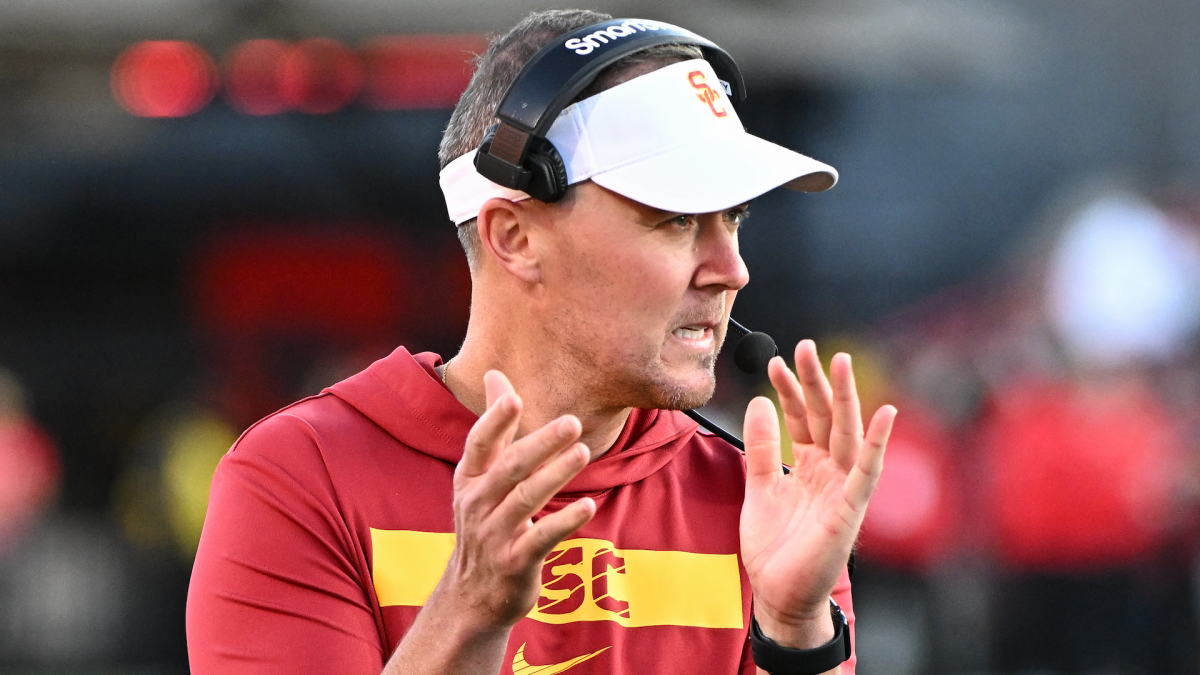
USC coach Lincoln Riley is pushing back against criticism over the Trojans' sparse home crowds, but the empty seats at the Los Angeles Memorial Coliseum are becoming hard to ignore as the program prepares for a pivotal 2026 season.
The Trojans opened their season with a win over San Jose State, yet the announced attendance of 51,144 was the program's second-lowest of the decade. That number stood in stark contrast to USC's status as a top-15 team with Heisman Trophy contender Jayden Maiava at quarterback and College Football Playoff expectations.
Riley dismissed the concerns during a Tuesday press conference, calling the criticism a false narrative pushed by people who don't follow the program.
This is USC, right? People are going to pay attention, and people are going to have an opinion. That's part of being a blue-blood school. I don't buy into the false narrative, Riley told reporters. The reality is during my years here, the attendance has gone up every single year here, as has our play in the Coliseum, including running the table last year in front of a lot of epic atmospheres. And I expect that to happen again this year.
What do the attendance numbers show at USC?
The data tells a more complicated story. USC's average home attendance dropped from 71,571 in 2024 to 67,782 in 2025. The Week 0 crowd of 51,144 was the second-lowest home attendance of the decade, trailing only the 47,406 fans who watched the Trojans lose to Arizona State in 2018.
USC blamed sweltering temperatures and humidity for the low turnout in the opener, issuing a statement that acknowledged the disappointing crowd while promising improvement.
We understand the factors that impacted Saturday's attendance, USC said. We have high expectations and a premier home schedule this season, and we know the competitive advantage an electric Coliseum atmosphere can provide our program. We thank our fans who showed up Saturday and look forward to seeing increased attendance the rest of the season.
California coach Tosh Lupoi, whose team plays in the Bay Area, openly questioned why a metro area of nearly eight million people produced such a small crowd.
There's close to eight million people in the greater San Francisco Bay Area, and I don't mean this by any disrespect to anybody, but to turn on the TV after our practice last Saturday and to see that environment in Los Angeles, that's disheartening to see what little amount of individuals came out to support, Lupoi said.
How does USC's attendance compare to past eras?
The Coliseum was once one of college football's most intimidating venues. From 2003 through 2012, USC averaged more than 80,000 fans per home game, with crowds topping 90,000 in 2005 and 2006 during the Pete Carroll era.
Attendance bottomed out under Clay Helton, averaging just 55,448 in 2018. Stadium renovations reduced capacity to roughly 78,500 that year and 77,500 in 2019, which complicates direct comparisons with earlier seasons.
USC fired Helton after the COVID-impacted 2020 season, when home games averaged only 56,215 spectators.
What does USC's 2026 home schedule look like?
Riley now has a home slate that offers the chance to change the narrative. After warm-up games against Fresno State and Louisiana, the Coliseum will host a gauntlet of Big Ten contenders.
- Oregon arrives Sept. 26
- Washington follows Oct. 3
- Ohio State visits on Halloween
- Maryland closes the home schedule in November
Those matchups carry enormous stakes for the College Football Playoff race. Beating Oregon or Ohio State would give USC the kind of résumé-defining wins the selection committee values. Winning both would elevate the Trojans from playoff hopeful to national championship contender.
Riley is 3-4 against ranked teams at home during his USC tenure, including wins last season over Michigan and Iowa.
Can USC rebuild its home-field advantage?
Los Angeles is a market where winning alone doesn't guarantee attention. The Trojans must make Saturdays feel important again, the way they did during the Carroll era. Until then, every wide shot of empty rows will invite the same questions.
USC has the schedule, the talent and the quarterback to make a statement. Now it needs the wins and the fan support to match.