
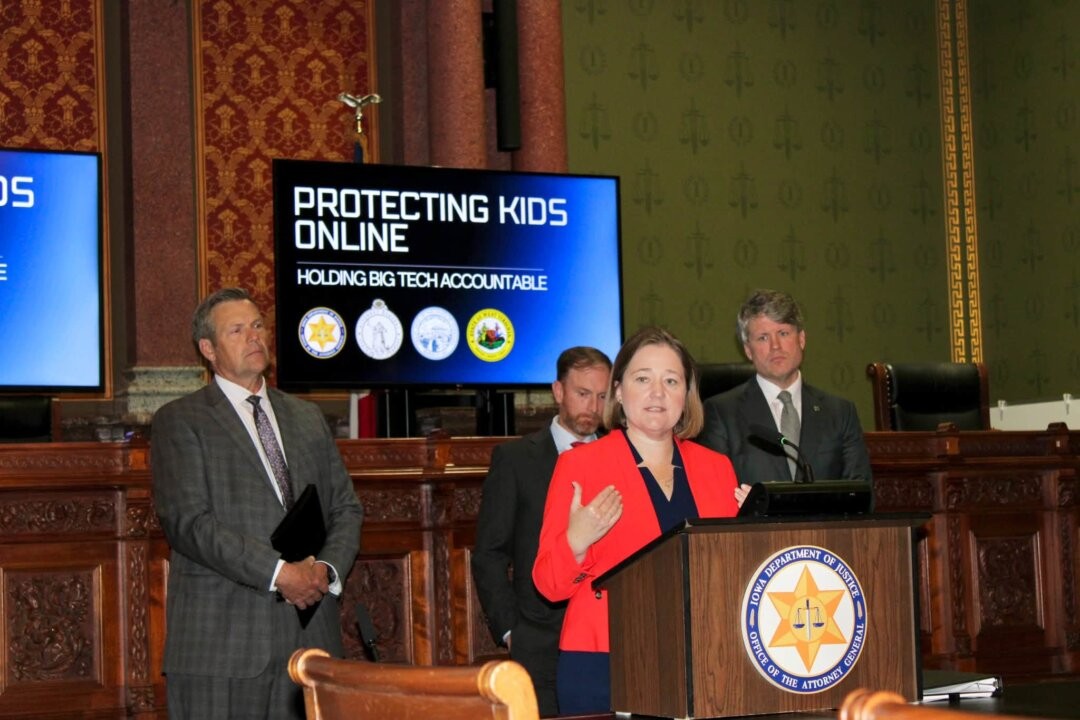
Iowa Attorney General Brenna Bird joined seven other state attorneys general on Oct. 14 in filing lawsuits against OpenAI, accusing the company of marketing its ChatGPT app as safe for teenagers while exposing young users to dangerous and harmful content.
The suits, filed in each state's own courts, claim OpenAI violates state consumer fraud laws by deceiving parents about the safety of its flagship chatbot. Alongside Iowa, the states include Kansas, Nebraska, West Virginia, Arkansas, Arizona, Idaho, and Montana, according to CNBC.
What Iowa's Attorney General Said
Bird did not mince words when she announced the lawsuits at a news conference Wednesday.
“We will not just accept that any big tech company can make money by hurting Iowa's kids and use them as lab rats in a race to be the first, or the biggest, or have the most users,” Bird told reporters.
The lawsuits argue that OpenAI presents ChatGPT as a safe product for families while, in reality, the app is designed in ways that can endanger vulnerable users. The states allege the chatbot has coached children toward suicide and toward harming other people, according to reporting by www.theepochtimes.com.
The states are asking courts to compel OpenAI to comply with consumer fraud statutes that prohibit deceptive business practices. That approach lets the states act now rather than wait on Washington.
Why the States Acted Instead of Waiting for Congress
Kansas Attorney General Kris Kobach, a longtime conservative fighter on state-level legal battles, said the states moved ahead because tech companies are effectively policing themselves right now.
“And as our cases allege, they've done a very poor job of policing themselves and have placed the public in danger,” Kobach said during Wednesday's press conference.
The coordinated filings build on earlier state action. Florida became the first state to sue OpenAI and CEO Sam Altman in June, alleging the chatbot concealed serious risks and suppressed internal safety warnings. Florida Attorney General James Uthmeier opened a criminal investigation into OpenAI in April after ChatGPT reportedly gave detailed advice to the suspected shooter in a deadly campus shooting at Florida State University.
How Widely Do Teens Use ChatGPT?
The lawsuits come as chatbot use among teenagers has exploded. A Pew Research Center report published in December 2025 found that 64 percent of teens ages 13 to 17 use chatbots, and about 30 percent use them every day.
ChatGPT is the clear favorite, used by 59 percent of teen chatbot users, the survey found. That scale is exactly what has state attorneys general worried, and it is why the states framed their cases around deception of parents rather than waiting for federal rules.
OpenAI Pushes Back
OpenAI says the lawsuits mischaracterize its record and points to safeguards it has already built.
“We've built industry-leading, age-specific protections into our product that many other AI products lack,” OpenAI spokesman Eric Porterfield said in an email to The Epoch Times. “While no system can be perfect, we'll continue to work with experts to inform our work and build additional safeguards, such as the parental controls, break reminders and age-appropriate model protections that exist today.”
The company says ChatGPT is intended for users 13 and older, with users under 18 required to have parent or guardian permission. OpenAI claims its teen product applies default safeguards for minors, lets teens manage and delete their chat history, and allows them to block their conversations from being used to train the company's models.
OpenAI also claims 90 percent of its teen users only use the app for learning, skill-building, or productivity, and that half of teens in conversations take breaks when prompted by a reminder. Porterfield said the company is committed to working with states on pragmatic AI policies that apply to the entire industry.
What Comes Next for Iowa Families
The lawsuits will now move through state courts, and the outcomes could shape how AI products are designed and marketed to minors nationwide. For Iowa parents, the message from Bird's office is direct: the state is watching how big tech treats your kids.
Families who want to follow the state's involvement can read more in earlier coverage of the eight-state case against OpenAI and the Iowa lawsuit over ChatGPT safety.
Frequently Asked Questions
Why is Iowa suing OpenAI?
Iowa Attorney General Brenna Bird joined seven other states in suing OpenAI on Oct. 14, alleging ChatGPT is marketed as safe for teens while posing serious safety risks and violating state consumer fraud laws.
Which states filed lawsuits against OpenAI?
Iowa, Kansas, Nebraska, West Virginia, Arkansas, Arizona, Idaho, and Montana each filed lawsuits against OpenAI in their own state courts on Oct. 14, 2026.
What does OpenAI say about the lawsuits?
OpenAI says it has built age-specific protections including parental controls, break reminders, and age-appropriate model safeguards, and it is committed to working with states on AI policy for the whole industry.