
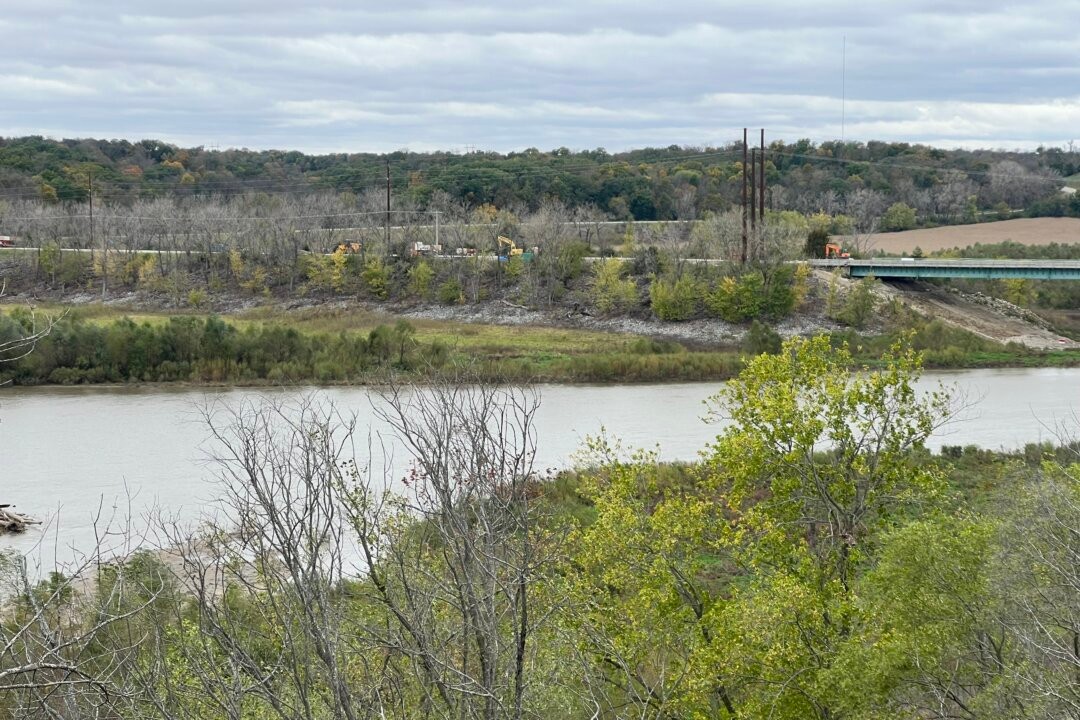
Water quality and cancer rates have moved to the center of Iowa's 2026 midterm elections, with voters in all 99 counties weighing how candidates for governor and U.S. Senate would tackle nitrate pollution in drinking water. The issue took off after a University of Iowa report in March predicted 21,700 new cancer diagnoses this year, more than 30 percent higher than a decade ago.
According to www.theepochtimes.com, the annual Cancer in Iowa report from the Iowa Cancer Registry at the University of Iowa College of Public Health set off a ripple effect across the state's campaigns, and concerns escalated in late July when the Central Iowa Water Works revealed its Nitrate Removal Facility ran for a record 193 days during the 2026 season.
What the University of Iowa Report Found
The report projected that 21,700 Iowans will be diagnosed with cancer in 2026, and it found that Iowa's rate of young adult cancer diagnoses ranks second highest in the country. Prostate, breast, lung, colon, rectum, and skin melanoma cancers top the list of new diagnoses, with Polk, Linn, Scott, and Johnson counties expected to see the most new cases because of their larger populations.
The report suggested that drinking-water nitrate-nitrogen exposure at average levels above the federal limit was associated with an increased risk of prostate cancer, and it pointed to a possible link with ovarian cancer. It noted more research is needed on how environmental exposures contribute to cancer risk.
At the same time, University of Iowa researchers found that behavioral factors such as smoking, drinking, and obesity explain about 76 percent of the extra cases of the five most common cancers Iowa sees compared with the rest of the country. A smaller share may be tied to environmental factors, including nitrates.
How the Governor's Candidates Would Fix It
Republican Zach Lahn and Democrat Rob Sand, the state auditor, agreed during their Oct. 27 debate that nitrate levels in water are contributing to a surge in cancer rates. Both back funding for the Iowa Water and Land Legacy program, support water quality monitoring, and prefer farmer incentives over government mandates.
Lahn has made the issue a defining theme of his campaign. He argues nitrates are the primary driver of rising cancer and wants targeted funding aimed at the most polluted waterways.
'The high nitrate load in water is one of the top causes of colon cancer, bladder cancer, ovarian cancer, and other types of cancer,' Lahn said during the final governor's debate on Oct. 28. 'I believe this is one of the biggest issues that we have not been looking at seriously.'
Lahn's plan calls for expanding water monitoring statewide, creating targeted conservation incentives, and developing stackable, long-term incentives to fund saturated buffers, wetlands, and cover cropping to stop contamination at the source.
His approach resonates with farmers. Republican voter Brenan S., who saw Lahn speak at a campaign event in Lyon County, said he uses some of the same practices Lahn promotes.
Sand has cited the University of Iowa's own research, noting that nitrates are not the main cause of the cancer rise, while still calling for action. His proposals include more aggressive water quality monitoring, farmer-led water quality programs, radon testing investments, tax credits for farmers, a dirty water notification system, and a new Cancer Task Force.
Senate Race Tied by Water Quality
The U.S. Senate race, rated a 'Toss Up' by The Cook Political Report, has also been shaped by the issue. Republican Ashley Hinson has called for infrastructure investments, water quality monitoring, and conservation programs. Democrat Josh Turek wants more funding for nitrate-removal infrastructure at treatment plants, incentives for farmers, and restored rural health care.
CNN reported that both Hinson and Turek called this month for more funding to ensure safe drinking water. The Washington Sun quoted Turek saying voters are watching 'who actually cares about the health care crisis and the cancer crisis and the water quality crisis, and who is legitimately going to address it.'
Voters Are Paying Attention
Timothy Hagle, an associate professor of political science at the University of Iowa, said the wave of news coverage on water quality and cancer, combined with limited health facility access in rural areas, has put the issue on every voter's radar.
'Pretty much everybody in both parties is talking about healthcare, water quality, those sorts of things,' Hagle told The Epoch Times. 'Now, the difference, of course, is going to be how they want to address this.'
Voters are already acting on their concerns. The New York Times reported that many Iowans are paying out of pocket to update their home water systems, driven by worry that state government is not doing enough.
Democratic voter Maisie Stilwell, speaking outside an early polling location in Des Moines, said she does not let her children drink the tap water.
'It shouldn't be on us, the consumers, to be solving this problem that is systemic in our state and that desperately needs to be addressed,' Stilwell said.
What Iowans Can Do at Home
Drinking-water expert Rich 'Raz' Razgaitis, co-founder and CEO of FloWater, said Iowa has some of the most nitrate-polluted rivers in America. He warned that even getting levels below the legal limit does not always mean the water is safe.
'The federal nitrate limit was set to protect infants from blue baby syndrome, not cancer,' Razgaitis told The Epoch Times, referring to a condition caused by inadequate oxygenation of the blood.
He urged Iowans with reverse osmosis systems to keep their filters current and to use a system certified under NSF/ANSI 58 specifically for nitrate reduction.
Frequently Asked Questions
Why are cancer rates rising in Iowa?
The Iowa Cancer Registry projects 21,700 new cancer diagnoses in 2026, up more than 30 percent from a decade ago. University of Iowa researchers say behavioral factors such as smoking, drinking, and obesity explain about 76 percent of Iowa's excess cases compared with the rest of the country, with environmental factors like nitrates possibly playing a smaller role.
Is Iowa's tap water safe to drink?
Public water systems are required to meet federal nitrate limits, but experts such as Razgaitis note the limit was designed to protect infants from blue baby syndrome, not to guard against cancer risk. Households concerned about nitrates can use reverse osmosis systems certified under NSF/ANSI 58 for nitrate reduction.
Where do the candidates stand on water quality?
Both Zach Lahn and Rob Sand support farmer incentives over mandates and back water monitoring. Lahn wants targeted funding for the most polluted waterways, while Sand proposes a Cancer Task Force, a dirty water notification system, and expanded monitoring programs.