
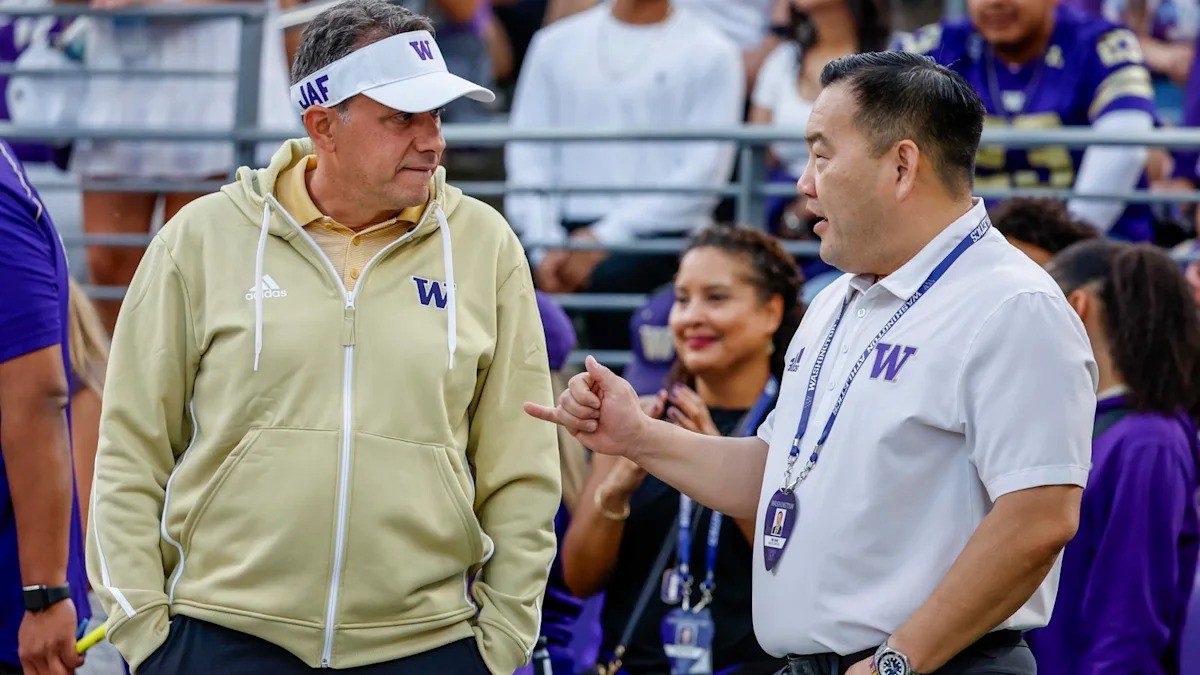
SEATTLE, Wash. — Washington Huskies head coach Jedd Fisch admitted Monday that his program does not have the NIL money to compete with the Big Ten's top spenders, a shortfall the Iowa Hawkeyes exposed in a 41-24 rout on Oct. 9 at Husky Stadium.
Speaking at his weekly news conference, Fisch said Washington's roster ranks near the bottom of the 18-team conference in spending, leaving the Huskies unable to buy veteran replacements in the transfer portal after losing seven players to the 2026 NFL Draft.
What Jedd Fisch Said About Washington's NIL Shortfall
According to Yahoo Sports, Fisch was hired before the 2024 season from Arizona and publicly expressed excitement about taking over a program with a national championship pedigree and what he believed were deeper financial resources. Two years in, he said the reality looks different.
“Two years ago, when I said that, I absolutely felt that,” Fisch said. “By being here now, two to three years, you learn about what type of investments we're getting from all those companies and are we really able to tap into those resources right now? It's public knowledge that our roster is not very high on the cost scale.”
A September report from The Athletic placed Washington's annual spending at $21-25 million, among the lowest in the Big Ten and comparable to programs such as Northwestern and Michigan State. USA Today reported that Fisch put the program's financial cards on the table, stating UW simply cannot afford to replace its top talent through the portal.
How the Hawkeyes Exposed the Problem
The Hawkeyes rolled up 41 points against a Washington defense stacked with first- and second-year players, and the Huskies sit at 3-3 overall and 0-3 in Big Ten play. Washington has not scored more than 24 points against any FBS opponent this season, a steep fall for a team that ranked 17th in the preseason Associated Press Top 25 and drew dark-horse College Football Playoff buzz from analysts.
Fisch pointed to the trenches, where veteran-heavy lines from Iowa and Minnesota physically dominated his young front. The contrast showed up plainly: Washington's lines feature several freshmen and sophomores, while the programs beating them lean on fourth- and fifth-year players built through retention and targeted portal spending.
“It's really about, can we invest and commit the dollars to retain this team,” Fisch said. “Can we pick and choose players that are older to come in and fill some holes? And then, on top of that, can we make the type of commitment that's needed financially over the course of the next 12-24 months that we're capable of playing with fourth year players?”
Retention Is the Next Battle for Washington
The Huskies have already watched young talent walk out the door. Left tackle Paki Finau transferred to BYU and has become one of the best players at his position in the country. Running back Adam Mohammed, once viewed as the heir to Jonah Coleman, transferred to California, where his 336 rushing yards and three touchdowns would lead Washington in both categories.
Fisch said the exodus stems directly from the budget. “Last year we had seven guys drafted,” he said. “To replace the seven guys drafted, we needed to use our freshmen because we didn't have the funds to replace them in the portal. Because of that, we now need our freshmen, our sophomores, to stay. To do that, then we'll be able to get back to where we wanted to be.”
The coach pointed to UCLA, the Big Ten's oldest roster, and Indiana, the 2025-26 national champions, as examples of programs that either retained veterans or paid to supplement them in the portal. Washington, he said, has to choose one path because “there's only so many resources you have to go in the portal.”
Sports Illustrated pushed back on the framing, noting the Huskies could afford players such as Willis, now with the San Francisco 49ers, as recently as last season, and calling money a convenient excuse for the program's decline.
Why It Matters for Iowa Fans
For Hawkeye supporters, the Oct. 9 win looks even better in context. Iowa's veteran lines and stable roster construction, built the old-fashioned way through development and retention, overwhelmed a program that spent the preseason ranked 15 spots higher. It is a reminder that in the NIL era, patience and player development still beat a shoestring scramble for transfers.
Washington's young players are getting valuable reps. True freshman defensive tackle Derek Colman-Brusa has shown flashes, and freshman cornerback Jeron Jones has contributed, according to Yahoo Sports. But offensive lineman Kodi Greene and running back Brian Bonner have been pushed into starting roles before they were ready.
The Huskies face a difficult question over the next 12 to 24 months: find the money to keep their young core, or keep watching developed players leave for programs that pay. As Fisch conceded, in today's NIL environment it cannot be one or the other. It has to be both.
Frequently Asked Questions
What did Jedd Fisch say about Washington's NIL funding?
Fisch said at his Monday news conference that Washington's roster “is not very high on the cost scale” and that the program lacked the funds to replace seven drafted players through the transfer portal.
How much does Washington spend on its roster?
A September report from The Athletic put Washington's spending at $21-25 million, among the lowest in the 18-team Big Ten conference.
What was the Iowa-Washington score?
Iowa defeated Washington 41-24 on Oct. 9 in Seattle.