
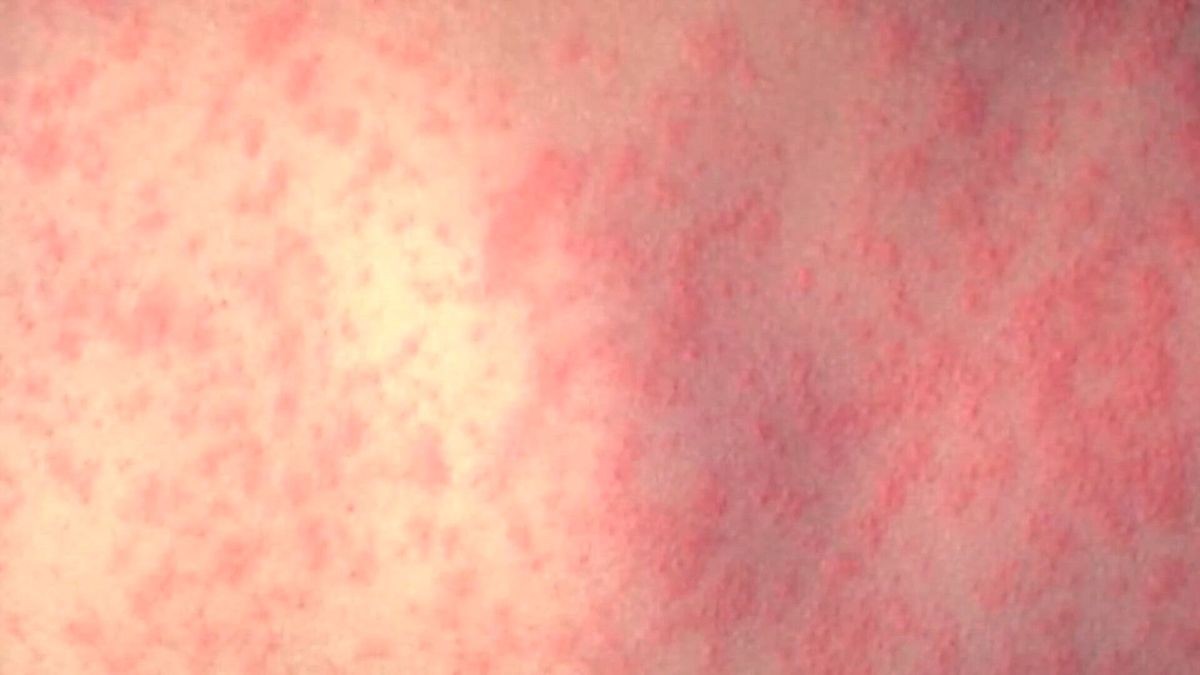
Iowa health officials are sounding the alarm after the United States officially lost its measles elimination status, a designation granted by the Pan American Health Organization that had stood as one of public health's proudest accomplishments.
The loss means the virus has now spread person to person inside the country for at least a year, and Iowa is feeling the effects firsthand. According to Yahoo, the state has recorded 53 confirmed measles cases in 2026, up from just nine cases in all of 2025.
What Losing Elimination Status Means
The Pan American Health Organization, an international independent commission, grants elimination status when a disease no longer spreads continuously within a country. Losing it confirms what Iowa health leaders said they already knew: measles is no longer just a traveler's disease being imported from abroad. It is moving through communities here at home.
“I think it's not surprising to any of us,” said Polk County Health Department director Juliann Van Liew. “Clearly measles is not eliminated here in the United States. It's the reality. It's what we're living with now.”
Most Iowa Cases Involve Unvaccinated People
State medical director Dr. Robert Kruse said the reversal should matter to every Iowan, regardless of politics. Most of Iowa's confirmed cases this year have involved people who were either unvaccinated or whose vaccination status is unknown.
“I think what I want Iowans to understand is that measles elimination was one of our great public health achievements of our generation,” Kruse said. “The fact that we're discussing its loss should be a concern for all of us.”
Nationally, the country is bracing for the fallout of its worst measles outbreak in decades, FOX31 Denver reported, with federal health officials facing criticism over the pace of the vaccination response. The Hill noted the outbreak persists as the U.S. nears the formal loss of elimination status, with public health leaders urging elected officials to act faster.
Only Seven Iowa Counties Reach Herd Immunity
The numbers behind Iowa's outbreak tell a clear story. Only seven counties in the state have reached herd immunity, defined as at least 95 percent of residents having at least one dose of the MMR vaccine. Polk County, home to Des Moines and the state's largest population, sits well below that threshold at 85.4 percent.
That gap leaves large numbers of Iowa children and families exposed, and health officials say closing it will take more than government programs. It will take parents, schools, doctors and community leaders working together.
“It takes all of us, and our hope is that by continuing this conversation, continuing to normalize the fact that we need to return to having fully vaccinated kids, that the community can work together to raise those rates,” Van Liew said.
The Vaccine: What Parents Need to Know
Two doses of the MMR vaccine provide 97 percent protection against measles, according to state health officials. Infants between 12 and 15 months old can receive the first dose, and toddlers between 4 and 6 years old can get the second.
Health leaders stressed that Iowans who remain unvaccinated risk becoming severely ill or even dying from the virus. Measles is one of the most contagious diseases known to medicine, spreading through the air and lingering in rooms long after an infected person has left.
Dr. David Margolius, speaking on a call with reporters, said reaching elimination status in the first place was “incredibly difficult,” and returning to it will be just as hard, WYSO reported.
Why This Matters for Iowa Families
For Iowa parents, the practical stakes are straightforward. Children in counties below the 95 percent vaccination threshold face higher exposure risks at schools, daycares and community gatherings. An outbreak in a single under-vaccinated school can spread quickly and force quarantines that disrupt classrooms, sports seasons and family schedules.
Kruse said public health agencies cannot fix this alone.
“This is not something that public health can accomplish alone,” Kruse said. “It really requires partnerships with families, schools, healthcare systems and community leaders.”
Iowa's experience mirrors a national trend. WHO13 reported that falling vaccination rates and rising cases drove the loss of the elimination status, raising concerns over childhood vaccination rates in Iowa specifically.
Frequently Asked Questions
How many measles cases does Iowa have in 2026?
Iowa has recorded 53 confirmed measles cases in 2026, compared with nine cases in 2025, according to state health officials.
What is herd immunity for measles?
Health officials define herd immunity as at least 95 percent of residents having at least one dose of the MMR vaccine. Only seven Iowa counties currently meet that benchmark, and Polk County sits at 85.4 percent.
When can children get the MMR vaccine?
Infants ages 12 to 15 months can receive the first MMR dose, and children ages 4 to 6 can receive the second. Two doses provide 97 percent protection against measles.