
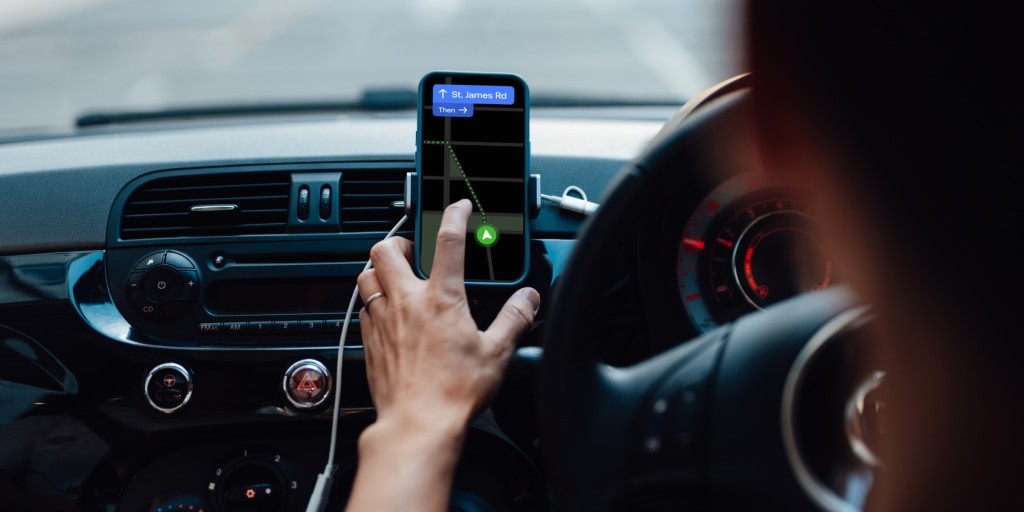
Iowa drivers who reach for their phones at red lights or while cruising down I-80 could face fines under the state's hands-free driving law. Iowa is one of more than 30 states that now ban handheld phone use while driving, making it illegal to hold or manually operate a cell phone behind the wheel. The law applies even when stopped at a traffic signal, a change that has caught many drivers off guard.
The shift reflects a broader national trend toward stricter distracted driving rules. While texting bans were once the standard, states are now moving to no-touch laws that prohibit any manual phone use while driving. For Iowa motorists, understanding the specifics of these rules is essential to avoid costly tickets and insurance hikes.
What is Iowa's no-touch phone law?
Iowa's hands-free law makes it illegal for drivers to hold a cell phone or manually operate it while driving. The law covers all drivers, not just teens or commercial license holders. Voice commands and Bluetooth connections remain legal, allowing drivers to make calls or use navigation without touching their phones.
The law targets the growing problem of drivers scrolling social media, changing music, and reading emails behind the wheel. Law enforcement officers no longer need to prove a driver was texting. Simply holding a phone is enough for a citation.
“No-touch laws are the evolution of texting-while-driving laws,” said Ryan McMahon, senior vice president of strategy at Cambridge Mobile Telematics. “Those laws were written when texting was the primary concern. Today, drivers are scrolling, using social media, changing music, reading emails and doing countless other things on their phones.”
What are the penalties for breaking Iowa's hands-free law?
Iowa drivers caught violating the no-touch law face fines starting around $100 for a first offense. Repeat violations bring steeper penalties, with fines climbing to $500 or more. Drivers may also receive points on their licenses, which can lead to higher auto insurance premiums for years.
While Iowa does not escalate to criminal charges for simple violations, habitual offenders could face license suspension. The exact penalties depend on the circumstances and the driver's record. Iowa law also includes exceptions for emergency calls to 911 and use by law enforcement or first responders.
How can Iowa drivers stay compliant?
Staying legal while driving in Iowa is straightforward. Drivers should mount their phones on a dashboard or windshield holder and use voice commands for calls, texts, and navigation. Bluetooth connections to the car's built-in system are also permitted.
Several products can help Iowa drivers stay compliant. Wireless CarPlay adapters convert factory wired systems to wireless, allowing voice-activated control. Phone mounts with 360-degree rotation and extendable arms keep devices visible without requiring drivers to pick them up.
McMahon advises minimizing phone interaction altogether. “Just remember the goal is to minimize interaction with the phone while driving,” he said.
Which other states have no-touch phone laws?
Iowa joins more than 30 states plus Washington D.C. in banning handheld phone use. The list includes neighboring states like Minnesota, Missouri, Nebraska, Illinois, and Wisconsin. Each state has its own specifics, but the trend is clear: hands-free driving is becoming the national standard.
Some states allow a single tap to answer a call, while others like California prohibit touching the phone at all, even at red lights. Iowa's law falls in the stricter category, requiring drivers to keep their hands off devices entirely while the vehicle is in motion.
What should Iowa drivers do now?
Iowa motorists should review the state's DMV website for the latest details on hands-free driving rules. Penalties and enforcement can change as the legislature updates distracted driving laws. Investing in a quality phone mount or Bluetooth adapter is a smart move for anyone who relies on their phone for navigation or calls.
The bottom line: keep your hands on the wheel and your eyes on the road. A quick glance at your phone is not worth the ticket, the insurance hike, or the risk to yourself and others.