
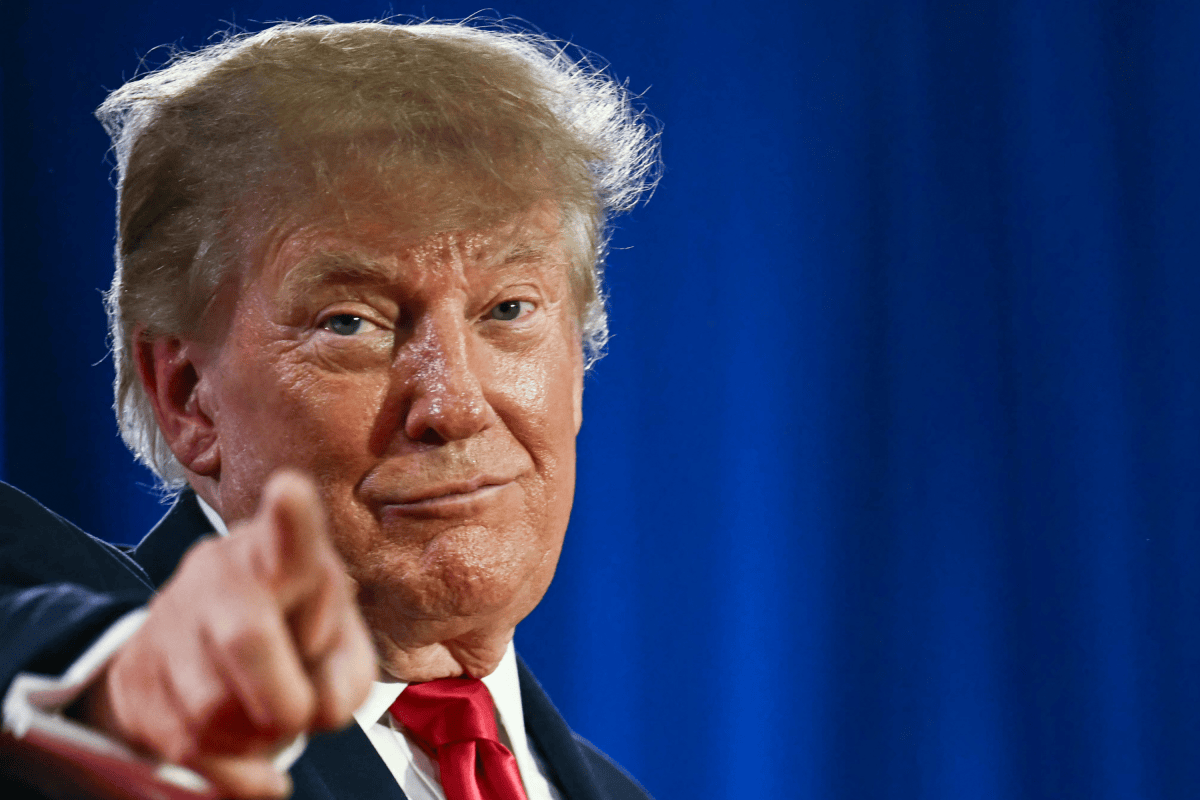
President Donald Trump's approval rating among rural voters climbed back above water in mid-October, a shift that could strengthen Republican campaigns across Iowa and the heartland just two weeks before the November 3 midterm elections. An Echelon Insights poll conducted October 15 through 19 found 50 percent of rural voters in the likely electorate approve of the president's performance, with 49 percent disapproving, according to Newsweek.
The October reading marks a dramatic turnaround from September, when Trump's rural approval sank to 40 percent against 59 percent disapproving, his worst result in the Echelon polling series all year. The rebound represents a 20-point swing in net approval in a single month, arriving at a moment when Republicans are defending unexpectedly competitive Senate seats in rural states from Iowa to Alaska.
Trump brings the message to Sioux City
Trump rallied Republican voters in Sioux City on Thursday, October 22, urging the crowd at an airport hangar to back GOP candidates in the midterms as part of a national campaign tour aimed at boosting Republicans in tight races.
“Pretend I'm on the ballot, because if you get out, we're going to win big,” Trump told supporters, Newsweek reported.
The Sioux City stop underscores how much the White House is investing in Iowa, where Emerson College Polling released a survey this month showing the state's economy as the top concern for 42 percent of voters. That focus lines up with what Iowa Republicans have argued all cycle: that household budgets, fuel bills and farm income, not national headlines, will decide this election.
Where the Iowa Senate race stands
Emerson's October 5 and 6 survey of 650 likely Iowa voters put Republican Ashley Hinson at 47 percent and Democrat Josh Turek at 45 percent, with Libertarian Thomas Laehn at 2 percent and 7 percent undecided. The margin of error of plus or minus 3.8 points leaves the candidates statistically tied.
An earlier Marist Poll told a different story. Its September 17 to 20 survey of 1,050 registered voters gave Turek 50 percent and Hinson 42 percent, with a margin of error of plus or minus 4.4 points. Marist also found 46 percent of respondents said their family finances had gotten worse over the previous year.
The gap between the two polls reflects turnout assumptions: Marist surveyed registered voters, while Emerson modeled likely voters closer to Election Day. In a race this close, who actually shows up on November 3 will make all the difference.
Hinson has walked a careful line, criticizing the administration over the Iran war and its handling of beef tariffs while keeping the president's supporters in her corner. Iowans “shouldn't have to foot the bill at the pump or the checkout line,” she said, while farmers and ranchers face higher costs.
Rural approval recovery offers GOP an opening
The Echelon series shows how volatile rural opinion has been this year. Trump began June at 51 percent approval among rural voters, slipped to 47 percent in July, recovered slightly in August, then cratered in September before the October rebound.
Republicans hope the improving rural mood translates into votes for their candidates, but the two do not always move together. Voters can approve of a president without backing his party's local nominee, a problem that has surfaced in Kansas and Alaska as well as Iowa.
The broader electorate Echelon surveyed remains unfavorable to Trump, with 39 percent approving and 60 percent disapproving, and Democrats leading the generic congressional ballot by five points. Echelon polled 1,010 likely voters with a margin of error of plus or minus 3.6 points, and the one-point rural advantage is narrow enough that it should not be read as proof of a lasting shift.
Economic anxiety explains much of the movement. Echelon found 74 percent of voters believe ending the Iran war would help reduce the cost of living, and the same share picked cutting government spending.
Republicans on defense in Kansas, Alaska and Nebraska
The GOP's rural challenges extend well beyond Iowa. In Kansas, a state that has not elected a Democratic senator since 1932, Republican Roger Marshall is locked in a tight race with Democrat Adam Hamilton, a United Methodist pastor campaigning on living costs and the Iran war. An Emerson College Polling/Nexstar Media survey in mid-September put Hamilton at 45 percent and Marshall at 43 percent, with Trump underwater statewide at 40 percent approval.
In Alaska, Mary Peltola is challenging Senator Dan Sullivan in a state Trump carried by 13.1 points in 2024, and a Data for Progress poll in October gave Peltola a narrow 51-to-49 edge. Al Jazeera's midterm analysis lists Alaska and Iowa among states that could go either way.
Even Nebraska has required Republican defense. Sabato's Crystal Ball downgraded the state's Senate race from “Likely Republican” to “Leans Republican” on October 14, though forecasts still favor incumbent Pete Ricketts over independent Dan Osborn.
White House makes its case
White House spokesman Davis Ingle told Newsweek that Trump built “one of the most robust coalitions in political history” and remains the Republican Party's “best messenger.” Ingle pointed to tax cuts, lower prescription drug costs, border enforcement, private-sector job growth and rising retirement accounts as evidence, adding that Trump is committed to keeping Republican majorities in Congress.
That claim faces its test on November 3. National polling has been rough for the president, with The Hill reporting new lows in New York Times/Siena and CNN surveys days before the midterms. Midterm elections historically punish the president's party, and Republicans are working to defy that pattern.
For Iowa, the final stretch comes down to turnout. Republicans need voters who feel warmly toward the president to show up, choose his party's candidates and look past disagreements on policies affecting their farms and household budgets. The Sioux City rally was designed to do exactly that.
Frequently asked questions
What is Trump's approval rating among rural voters?
Fifty percent of rural voters in the likely electorate approved of Trump's performance in an Echelon Insights poll conducted October 15 to 19, 2026, against 49 percent who disapproved.
Who is leading the Iowa Senate race?
Emerson College Polling's October survey put Republican Ashley Hinson at 47 percent and Democrat Josh Turek at 45 percent, a statistical tie. An earlier Marist Poll gave Turek an eight-point lead among registered voters.
When are the 2026 midterm elections?
Election day is Tuesday, November 3, 2026.