
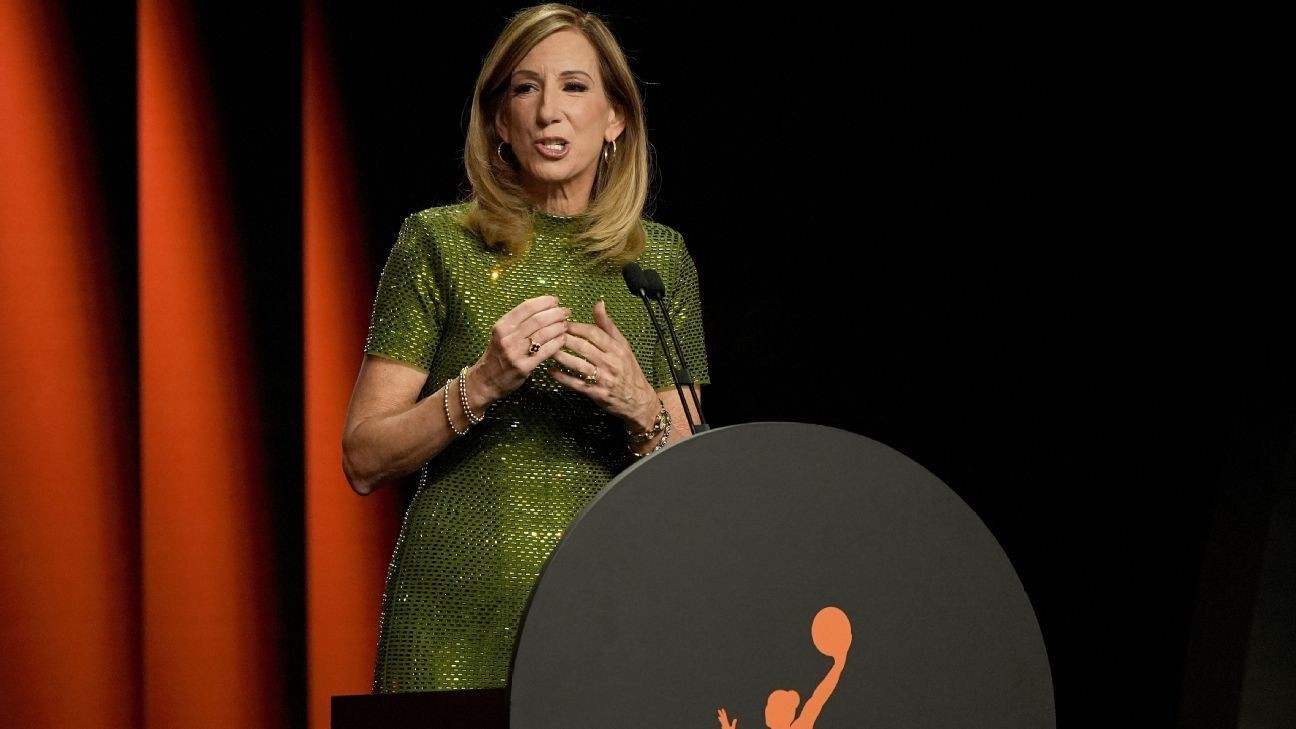
Cathy Engelbert, who took over as WNBA commissioner in 2019, announced Friday she will retire at the end of this year. Her seven-year tenure transformed the league financially, expanded its footprint, and delivered record-breaking growth, but it also ended with strained relationships with players and public criticism that may define her legacy.
Engelbert, a former CEO at Deloitte, came to the league with a business-first mindset. At her first news conference in 2019, she laid out three goals: expand the league, make it financially viable, and improve the player experience. By most measures, she achieved all three.
The league has grown from 12 teams to 15, with expansion to 18 teams planned by 2030. Franchise valuations have skyrocketed. The New York Liberty, purchased in 2019 for roughly $10 to $15 million, are now valued as high as $600 million. The WNBA signed the biggest media deal in women's sports history, and the 2026 collective bargaining agreement delivered the first million-dollar salaries in league history.
But Engelbert's final year was marked by tension with players. In September 2025, Napheesa Collier publicly criticized Engelbert during her exit interview, and other players backed her up. Boos rained down on Engelbert at the Commissioner's Cup finals and WNBA All-Star Weekend. Multiple figures around the league called for new leadership.
What Were Engelbert's Biggest Wins?
Kendra Andrews, who covers the league for ESPN, points to the WNBA bubble during the COVID-19 pandemic in 2020 as a major accomplishment. The 22-game season in Florida kept the league alive during a deadly pandemic and amid national upheaval following the deaths of George Floyd and Breonna Taylor. That condensed season set the stage for the league's growth over the next five years.
Michael Voepel, who has covered the WNBA since its first season, says the financial transformation is Engelbert's biggest win. Franchise valuations skyrocketed, which led to improved travel, better facilities, and expansion. The move to chartered flights, though delayed for years, also had a significant impact on player health, safety, and team operations.
Where Did Engelbert Struggle?
Engelbert's critics point to a pattern of reacting to problems rather than getting ahead of them. Player safety and online abuse are examples. In September 2024, Engelbert initially failed to condemn racist and vitriolic behavior surrounding the Caitlin Clark-Angel Reese rivalry, telling CNBC that rivalries are good for the league. She later said she missed the mark and called it a learning moment.
Voepel notes that Engelbert misjudged how to respond to players' concerns and struggled to build allies among both owners and players. Some detractors also point to the 2022 capital raise, when the WNBA sold a 16% equity stake to investors for $75 million, as a mistake. But Voepel says that move must be viewed in context: the league badly needed the cash infusion, and the rapid growth that followed was not expected at the time.
Who Could Replace Engelbert?
Bethany Donaphin, head of league operations, knows the commissioner's job well and briefly played in the WNBA after her college career at Stanford. Former player Swin Cash, who has management experience with the NBA's New Orleans Pelicans, is another name in the mix. Nneka Ogwumike, the longtime president of the players association who is retiring from the Los Angeles Sparks, has deep experience with the league through two CBAs, though she has been on the players' side of the table.
NBA Commissioner Adam Silver will make the hire. It will be his third appointment of a WNBA leader since he became NBA commissioner in 2014.
What Does the Next Commissioner Need to Do First?
Repairing the relationship between players and the commissioner's office is the top priority, Voepel says. Engelbert's successor must establish trust with players, but players also need to share responsibility for constructive communication.
The new commissioner will need to be an accomplished diplomat, balancing the interests of players, owners, fans, sponsors, and the NBA. The league also faces ongoing challenges around racial tensions and social issues that are magnified in women's sports.
Kareem Copeland, another ESPN writer, says the league often plays catch-up on predictable issues, from officiating problems to player safety. Engelbert's business background was her strength, but the league's slow reactions further alienated players.
Is the WNBA Better Off Than When Engelbert Took Over?
Without a doubt, yes. The league has grown from 12 staff members to nearly 100. The new media rights deal boosted economic growth. The WNBA has expanded from 12 teams to 15, with 18 planned by 2030. Two CBAs were negotiated, delivering more pay and benefits to players, including retired players.
The talent level entering the league has also advanced significantly. Young girls now have a more realistic path to a professional career in the WNBA, with more youth programs and training opportunities than ever before. Recent drafts have produced immediate impact players like Caitlin Clark, Paige Bueckers, Angel Reese, Olivia Miles, Sonia Citron, and Kiki Iriafen.
The WNBA is in a far better place than it was in 2018. The next commissioner will inherit a league with more opportunities and more challenges, and will need to build on the foundation Engelbert helped create while repairing the trust she lost along the way.
This article is based on reporting by ESPN's Michael Voepel, Kendra Andrews, and Kareem Copeland.