
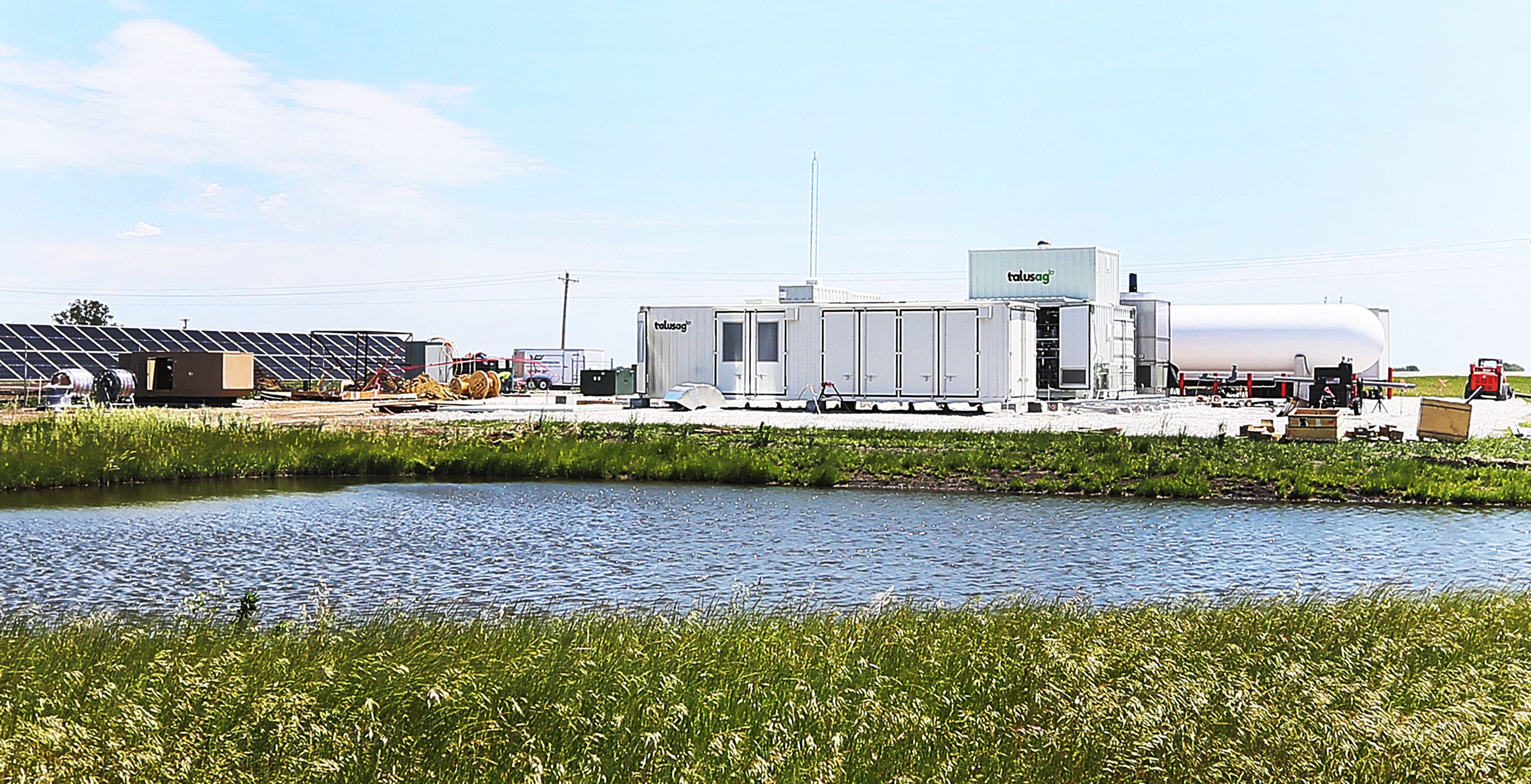
Iowa farmers are getting a direct shot of federal support after the Trump administration announced Thursday, Oct. 22, that it will pour roughly $603 million into domestic fertilizer production, including nearly $100 million for a company building ammonia facilities in Eagle Grove and Manning.
Vice President J.D. Vance and Agriculture Secretary Brooke Rollins unveiled the investment, which supports about $1.3 billion in projects across nearly 20 states. The announcement landed less than two weeks before the midterms, with competitive races in Iowa for governor, U.S. Senate and three of four U.S. House seats, all currently held by Republicans, according to Aol.
Iowa gets modular ammonia plants in Eagle Grove and Manning
The biggest Iowa winner is TalusAg, an Austin, Texas-based company selected for approximately $99.8 million in proposed USDA funding toward a $270.2 million project, according to the USDA announcement. The company plans to deploy 20 modular ammonia manufacturing units across 11 locations in seven states, including a planned $50 million investment in the two northwest Iowa towns.
TalusAg is no stranger to the state. Two years ago it partnered with Landus Cooperative to build a plant near Boone that produces so-called green ammonia, a facility that began production in 2025 and can make up to 20 tons per day. The design, first developed in Africa, uses solar or other renewable energy to pull hydrogen from water and combine it with atmospheric nitrogen to make ammonia, a key ingredient in nitrogen fertilizer. The process costs more than the traditional natural gas method, but federal clean energy tax credits help offset the difference, and modular production lets the company make fertilizer in smaller batches closer to the farmers who use it.
Why fertilizer prices are squeezing Iowa farmers
The timing matters. Iowa farmers say fertilizer prices have doubled, and in some cases tripled, compared with a year ago, and some worry about whether supply will even hold up next season. The Iran war, launched in February, has disrupted supplies of petroleum-derived urea, a key fertilizer component, on top of prices that were already climbing.
It is the fourth straight year that production costs have outpaced what farmers receive for corn, soybeans and other crops. The USDA projects the new investment will increase competition in a highly consolidated fertilizer industry and cut nitrogen fertilizer prices by 4.4% and potash prices by 5.3%.
Rollins framed the move as a matter of national security and self-reliance.
America cannot afford to depend on foreign nations for the fertilizer needed to grow our food and feed our families. We are taking decisive action to rebuild America's fertilizer manufacturing base and bring critical production back to American soil.
Funding redirected from failed Biden-era projects
The USDA had originally planned to spend $500 million on fertilizer production under the earlier initiative. The extra $100 million comes from redirecting what the department called failed Biden-era projects into what it described as viable, shovel-ready investments. USDA said about 90 projects dating from the previous administration had no signed agreements, and others had insufficient financing or were underperforming. Some, including kombucha- or worm-based fertilizer ventures, would not have increased domestic production at all.
The new money flows through the Fertilizer Investment and Expansion for Long-Term Domestic Supply program, known as FIELDS. The Iowa Capital Dispatch reported that USDA is pledging more than $573 million through its Rural Business-Cooperative Service to eight projects, several of which serve multiple states, supporting manufacturing in Iowa, Kentucky, Minnesota, Tennessee, Nebraska, Illinois, South Dakota, Florida, Texas, Oregon, New Mexico, Virginia, California, Arizona, Kansas and Indiana.
Part of a broader push for farm country
The fertilizer investment is the latest in a string of election-season moves aimed at farmers, who have been hammered by rising diesel and input costs. At a campaign rally in Kansas on Monday, Trump announced $8 billion in aid to offset diesel fuel prices that run about 75% higher than a year ago. Earlier this month, he signed an executive order deferring collection of federal taxes on diesel fuel for farm use.
Trump is scheduled to visit Sioux City on Thursday, Oct. 22, for a voter rally, putting him directly in front of Iowa voters days before they head to the polls.
Other projects receiving USDA financing
- Peace Valley, a $50.6 million project in Bartow, Florida, receiving $19.9 million to produce about 250,000 tons annually of nitrogen, phosphorus, potassium and sulfur fertilizer products.
- PCI Nitrogen, a $200 million project with half its funding from USDA, to modernize facilities in Pasadena, Texas, and St. Helens, Oregon, supporting 148,280 tons of annual production including ammonium sulfate and urea.
- Intrepid Potash, a $265 million project with $139 million in USDA funding, to build a facility near Carlsbad, New Mexico, producing 220,000 tons annually of sulfate of potash, a specialty fertilizer used mainly by produce growers.
- AdvanSix, a $98.1 million project with $47.4 million in USDA funding, to modernize and expand an existing ammonia plant in Hopewell, Virginia, expected to produce 84,000 tons of anhydrous ammonia annually.
- SUL4R-PLUS Illinois, a $69.7 million project with $34.9 million in USDA funding, to expand a sulfur fertilizer facility in Marissa, Illinois, adding about 100,000 tons of annual production.
- True Organic Products, a $30.6 million project receiving half its funding from USDA, to expand facilities in Helm, California; Boardman, Oregon; and Arlington, Arizona, producing 142,805 tons of fertilizer annually from agricultural byproducts.
- Agriculture Project Holdco, a $360 million project with $116.9 million in USDA funding, to develop facilities in Lewis, Kansas, and Fair Oaks, Indiana, converting dairy manure into 4,100 tons of liquid ammonium nitrate fertilizer annually.
Frequently asked questions
How much federal money is coming to Iowa?
TalusAg is slated to receive about $99.8 million in proposed USDA funding, with $50 million of its $270.2 million project planned for modular ammonia facilities in Eagle Grove and Manning.
How much could fertilizer prices fall?
USDA projects the investments will cut nitrogen fertilizer prices by 4.4% and potash prices by 5.3% by adding competition to a consolidated industry.
What is the FIELDS program?
It stands for Fertilizer Investment and Expansion for Long-Term Domestic Supply, the USDA initiative financing the eight projects announced Thursday through USDA Rural Development.