
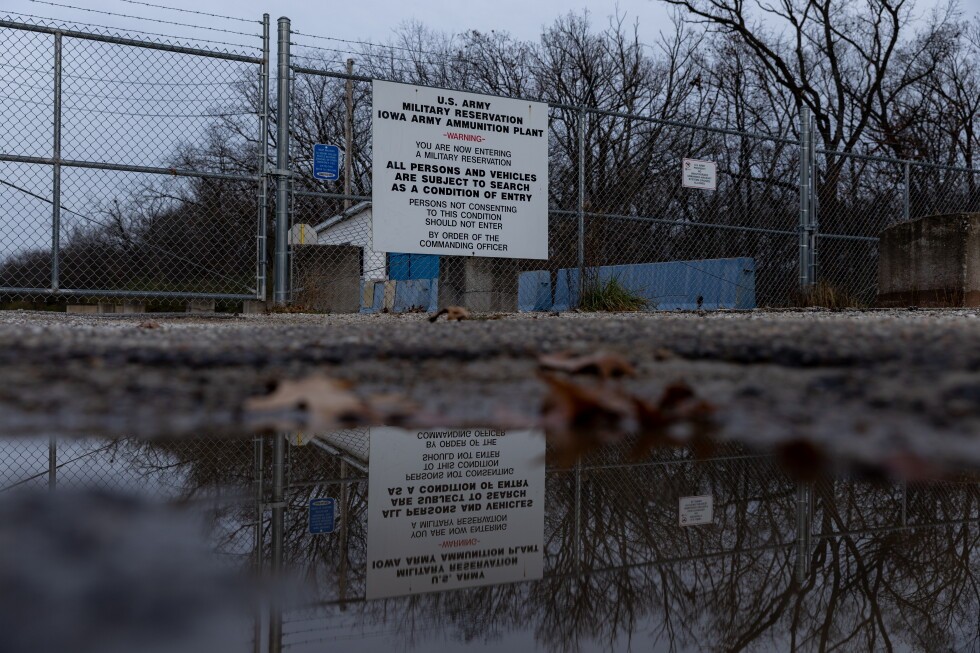
The U.S. Army plans to detonate the nation’s entire stockpile of lead azide Wednesday morning at the Iowa Army Ammunition Plant in Middletown, saying the unstable bomb-making chemical could otherwise explode without warning.
The operation has raised health and environmental concerns in southeast Iowa, particularly over the possible spread of lead dust. A federal appeals court cleared the way for the detonation Monday after finding that the U.S. Environmental Protection Agency had included adequate safeguards, according to AP NEWS.
Why the Army says the detonation is necessary
Lead azide is used in bomb-making, and the Army says the stockpile at the Middletown plant is dangerously degrading. Federal officials argue that destroying it in a controlled operation is safer than leaving material in place that could detonate at any time.
The Iowa Army Ammunition Plant sits near Middletown in Des Moines County, west of Burlington. The planned blast will dispose of the entire U.S. stockpile, making Wednesday’s operation a national military safety issue with direct consequences for nearby Iowa communities.
Officials overseeing the plan say barriers around the blast zone should contain much of the plume. They also expect Wednesday’s wind to carry remaining material southwest toward Missouri and away from Burlington.
Health concerns and the court challenge
Environmentalists sued last week to stop the detonation, arguing that lead dust could create lasting harm. In court filings, they said there is no safe exposure level for lead and stressed that children face particular risks.
“Once lead dust is dispersed, there is no undoing the harm,” one filing stated.
The Army changed the detonation date three times as public opposition grew, according to court documents. The delays also provided more time for safety preparations and for officials to wait for favorable wind conditions.
Monday’s federal appeals court ruling put the operation back on schedule. The court found that the EPA had adequately incorporated measures intended to limit the dispersal of lead dust.
What southeast Iowa residents were told to do
Government officials encouraged everyone within 5 miles of the site to evacuate to avoid possible exposure to lead dust in the air. That guidance came alongside assurances that physical barriers and weather conditions should reduce the risk beyond the immediate blast area.
The evacuation zone and the expected southwest path of the plume are central to the government’s safety case. Residents closest to the installation were asked to leave even though officials said nearby Burlington should remain outside the plume’s projected route.
The dispute leaves local families weighing two hazards described by the parties: the Army’s warning that the chemical could explode on its own, and opponents’ warning that a controlled detonation could release a toxic substance into the environment.
Federal accountability at the Iowa ammunition plant
The repeated schedule changes show the pressure federal officials faced as the planned operation drew public scrutiny. They also gave opponents additional opportunities to challenge whether the government had done enough to protect residents, property and natural resources.
The court ruling addresses the adequacy of the EPA’s safeguards, but it does not erase the underlying disagreement over lead exposure. Environmental challengers maintain that any dispersed lead dust presents an unacceptable danger, while the Army and federal regulators say the controlled blast includes measures to minimize that danger.
WTOP News reported that the stockpile of unstable and dangerous lead azide was scheduled for detonation in Iowa. The operation’s central justification remains the material’s deterioration and the risk of an uncontrolled explosion if it is left untouched.
What happens after the blast
Wednesday’s detonation is intended to eliminate the national stockpile in a single operation at the Middletown facility. Its immediate local test will be whether the barriers and forecast wind perform as federal officials have predicted.
For residents within the 5-mile evacuation area, the government’s instruction is straightforward: leave before the operation to avoid airborne lead dust. For the wider region, the court-approved safeguards and the plume’s projected movement toward Missouri will shape assessments of the operation’s impact.
The legal challenge did not stop the detonation, but it placed the Army’s timeline, the EPA’s planning and the risks to children in the public record. It also forced federal officials to defend their preparations after three changes to the date.
The Army’s position is that delay carries its own danger because the degrading chemical could explode at any time. Opponents’ position is that detonation could cause lead contamination that cannot be reversed.
Iowa lead azide detonation questions
Where will the lead azide be detonated?
The Army plans to conduct the detonation at the Iowa Army Ammunition Plant in Middletown, near Burlington in southeast Iowa.
Why did a federal court allow the operation?
A federal appeals court ruled Monday that the EPA had adequately incorporated safeguards designed to minimize the spread of lead dust.
Who was encouraged to evacuate?
Government officials encouraged residents within 5 miles of the detonation site to evacuate because of the possibility of lead dust in the air.
Where is the plume expected to travel?
Officials overseeing the operation expect Wednesday’s wind to carry the plume southwest toward Missouri and away from nearby Burlington.