
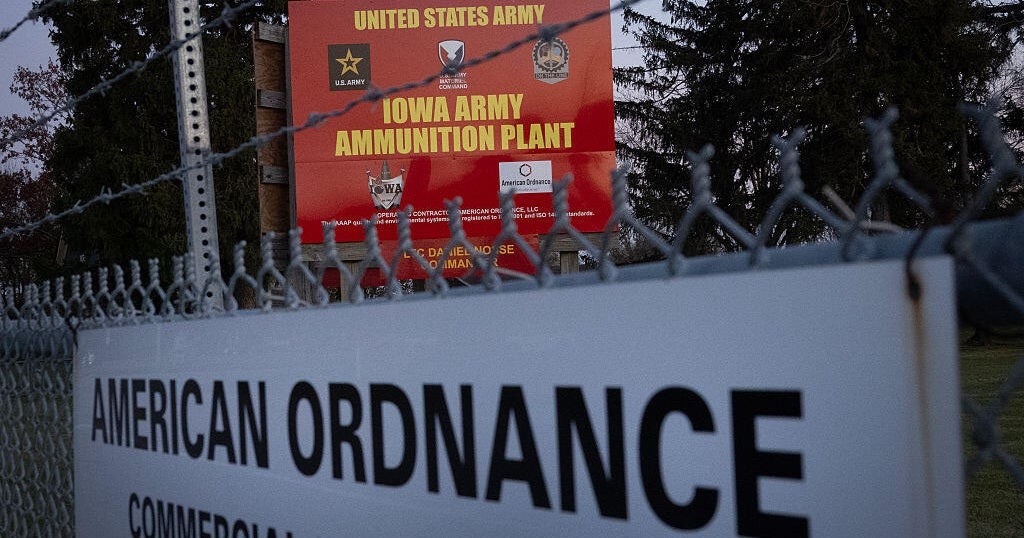
The U.S. Army plans to detonate about 5 tons of lead azide Wednesday, Nov. 25, 2026, in Middletown, Iowa, as Illinois officials launch a tracking website and press federal agencies for information.
The two controlled detonations are scheduled for the day before Thanksgiving after several delays and a legal challenge. Current federal weather modeling indicates the resulting plume would move south and southwest, away from Illinois, but state officials there say they still lack requested air monitoring details and updated Army modeling.
What the Army plans to detonate in Middletown
Lead azide is a highly sensitive explosive used in military ammunition since World War I. The material has been stored in Middletown, a community of fewer than 500 people roughly four hours west of Chicago.
Several dozen barrels containing the compound have degraded while remaining at the Iowa site for more than 20 years, NBC Chicago reported. The planned operation was initially expected Friday before delays and court proceedings pushed it back.
The controlled explosions could release a plume containing toxic lead particles. Those particles could settle on farms, vehicles, homes, playgrounds and other outdoor surfaces along the plume’s path.
Weather will determine where that material travels. Illinois officials said a detonation under certain conditions could affect the northwestern part of their state, making wind forecasts and air monitoring central to the public response.
Federal appeals court clears the operation
Environmental groups sued to stop the detonations, contributing to the repeated delays. A federal appeals court cleared the Army to proceed Monday.
The court’s reasoning left two basic possibilities: controlled, planned explosions or uncontrolled, unplanned explosions. The planned operation at least allows safety measures to be put in place, according to CBS News.
Wally Taylor, legal chair of the Sierra Club’s Iowa chapter, discussed the ruling publicly after two environmental groups sued the Environmental Protection Agency in an effort to halt the operation, FOX 32 Chicago reported.
The court decision does not resolve every question raised by state officials. Illinois agencies say they are still seeking specifics from the federal government about where air monitors will operate and how long monitoring will continue.
Current forecast points plume away from Illinois
The latest model from the National Oceanic and Atmospheric Administration shows that a controlled detonation Wednesday would not affect Illinois counties, according to Illinois officials.
The model shows light winds from the east and northeast. Those winds would direct the plume south and southwest.
That forecast offers some assurance across the Mississippi River, but Illinois officials are not treating it as a substitute for federal answers. The Illinois Environmental Protection Agency has continued requesting updated modeling from the Army and said it has not received the information.
For now, the state is relying on available NOAA data. Illinois officials also said federal agencies have not supplied the requested specifics about air monitoring locations and duration.
Gov. JB Pritzker has directed state agencies to remain “on alert” and prepare for possible impacts while seeking more information and transparency from the federal government.
Illinois launches public tracking website
The Illinois EPA, Department of Public Health and Emergency Management Office of Homeland Security have jointly launched a website to follow developments before and after the detonations.
The site will provide updates on possible effects for Illinois counties and residents. It also links to monitoring resources, including the Army’s official website.
Residents, schools and childcare facilities can find recommended precautions to use if the toxic dust plume affects Illinois. State officials have prepared that guidance even though the current NOAA forecast does not show an impact there.
The public information push puts a spotlight on federal communication with neighboring states. Illinois agencies are preparing emergency guidance while still waiting for the Army’s updated modeling and monitoring plans.
What happens Wednesday
The operation now consists of two controlled detonations scheduled for Wednesday, the day before Thanksgiving. Barring another delay, the action will address material that has remained at the Middletown site for more than two decades.
The immediate public questions concern the wind forecast, the extent of air monitoring and how quickly officials will share results. Illinois says its tracking website will carry developments and any potential county-level impacts as information becomes available.
Frequently asked questions
When is the Iowa lead azide detonation?
The Army has scheduled two controlled detonations for Wednesday, Nov. 25, 2026, in Middletown, Iowa. The operation follows multiple delays and a federal appeals court decision Monday allowing it to proceed.
How much lead azide will the Army detonate?
The Army plans to detonate about 5 tons of lead azide. The explosive compound has been used in military ammunition since World War I, and the stored material in Middletown has degraded over more than 20 years.
Will the detonation affect Illinois?
Illinois officials said the latest NOAA model shows no impact on Illinois counties if the detonation occurs Wednesday. Light east and northeast winds are expected to carry the plume south and southwest, though officials continue seeking updated federal modeling.