
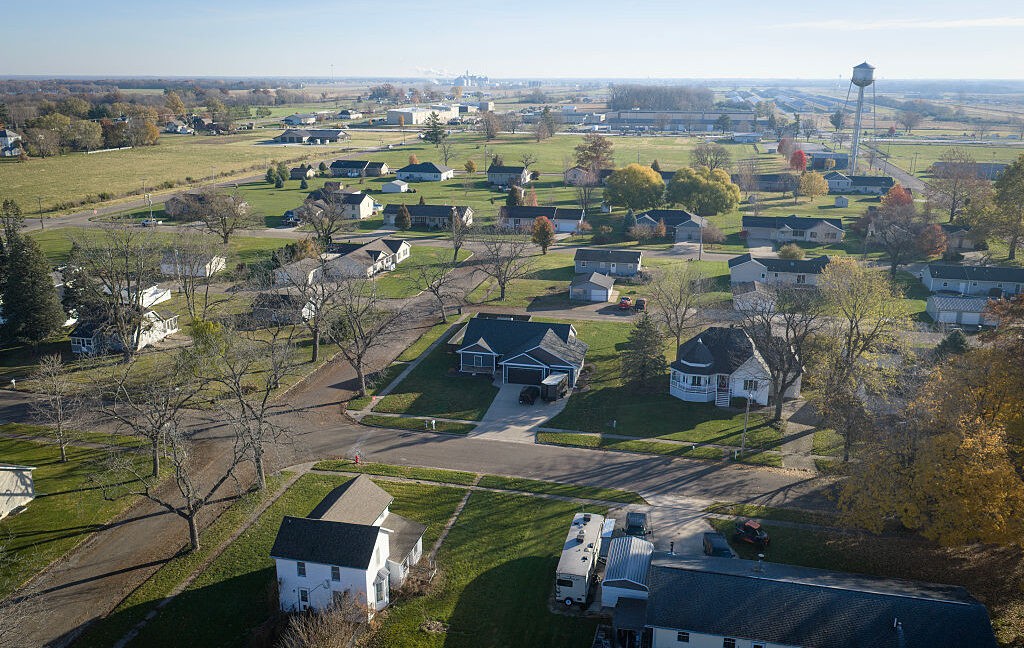
President Donald Trump on Nov. 23, 2026, ordered the Army to halt a planned detonation of 68 deteriorating barrels of lead azide at Iowa’s ammunition plant in Middletown.
Trump said the controlled blast at the Iowa Army Ammunition Plant was the “proper course,” but it should not proceed without agreement from a federal appeals court and Democratic Gov.-elect Rob Sand. The decision leaves roughly 9,700 pounds of unstable explosive material in storage as colder weather approaches.
Trump puts next move before court and Sand
Trump announced the order Monday afternoon after the Army had repeatedly delayed the detonation. The military’s latest schedule called for the blast on Wednesday, according to Ars Technica’s reporting.
The president warned that Sand and the court would bear responsibility if they rejected the controlled detonation and the material later exploded on its own. Sand will not take office until January.
“If he or the Courts do not agree, we will have no choice but to not proceed with the controlled removal of these hazardous materials, and be forced to hold the incoming Governor responsible for any and all death or destruction caused by this very unfortunate, and longterm, situation,” Trump wrote.
The Associated Press reported that Trump directed the Army not to detonate the bomb-making chemicals without court approval. Axios reported that the president also sought Sand’s agreement before any blast.
Why the Army wanted a controlled detonation
Lead azide is used in detonators for munitions. Army documents released last week said officials learned in March that the material at the Middletown plant had begun to degrade and crystallize.
In that condition, lead azide becomes highly unstable and sensitive to movement or friction. The barrels are held in earth-covered containers, and the Army now says their lids cannot be opened and the containers cannot be moved without risking a catastrophic explosion.
Administration lawyers told the court that freezing temperatures would add to the danger by making the crystals easier to break.
“If the crystals break, this could cause a chain reaction detonation that could cause an uncontrolled dispersal of lead azide into the environment,” the lawyers wrote in a weekend filing.
The Army has framed the choice as a controlled, mitigated explosion or an uncontrolled blast without safeguards. Ars Technica reported that the planned detonation could send toxic gases and neurotoxic lead as far as 100 miles from the facility.
Residents received little notice
The Army initially planned to detonate the barrels on Nov. 20. Iowa residents and local officials said they learned about the operation only days before it was scheduled.
Environmental groups led by Earthjustice filed an emergency legal challenge, arguing that the Army had not fully examined safer disposal methods. Late Thursday, a federal appeals court granted the group’s request to suspend the Environmental Protection Agency permit allowing the controlled detonation.
Acting Secretary of the Army Adam Telle then postponed the operation until Monday, saying the military needed time to communicate with Iowans. Telle called that the “latest possible moment” for a controlled blast before temperatures fell to dangerous levels, but the Army later moved the date to Tuesday and then Wednesday.
Government lawyers argued over the weekend that the Army did not need the suspended EPA permit because the material posed an “immediate threat to human health, public safety, property, or the environment.” Trump’s order has now stopped the Army from acting on that argument without the approvals he demanded.
Canceled disposal contract raises questions
The Army’s earlier handling of the stockpile is drawing scrutiny from Sand and others. In late March, the Army awarded a disposal contract to MuniRem Environmental, a Georgia company that neutralizes munitions with chemicals, according to a New York Times report cited by Ars Technica.
MuniRem proposed using a sulfur-based solution to break down the explosives and immobilize toxic chemicals. Its plan called for spraying the inside of the earth-covered containers and the surfaces of the barrels, reducing the risk of spontaneous explosions without a detonation.
The Army canceled the contract about two months later without explanation. An Army contracting officer told MuniRem in an email that the cancellation “was not based on deficiencies” in the company’s plans, the Times reported.
MuniRem’s founder said the company filed public records requests seeking an explanation but had received no response. That canceled contract now sits at the center of questions about why Iowa reached the point of choosing between two kinds of explosion.
Sand raised the issue in a social media post Sunday evening and called for a full accounting of the decisions that allowed the material to become so dangerous.
“Iowans deserve transparency over how we got here, then answers and accountability to stop this from ever happening again,” Sand wrote.
What happens next in Middletown?
The appeals court’s next action and Sand’s response will determine whether Trump allows the controlled detonation to proceed. Until then, the barrels remain at the plant while the Army maintains that falling temperatures increase the chance of an accidental blast.
For families near Middletown, the immediate questions are basic: how the military will protect the surrounding area, whether a chemical treatment remains possible, and who will explain the months between the March discovery and the public detonation plan.
Iowa lead azide detonation FAQ
Where is the explosive material stored?
The 68 barrels are stored in earth-covered containers at the Iowa Army Ammunition Plant in Middletown. The Army estimates the stockpile contains about 9,700 pounds of lead azide.
Why did Trump stop the detonation?
Trump said he supported a controlled detonation but wanted the federal appeals court and Gov.-elect Rob Sand to agree before the Army proceeded. He assigned them responsibility for any deaths or destruction if they rejected the plan and an uncontrolled explosion followed.
Is there an alternative to detonation?
MuniRem Environmental previously proposed neutralizing the material with a sulfur-based chemical solution. The Army canceled that contract and now says the barrels have degraded too far to open or move safely.