
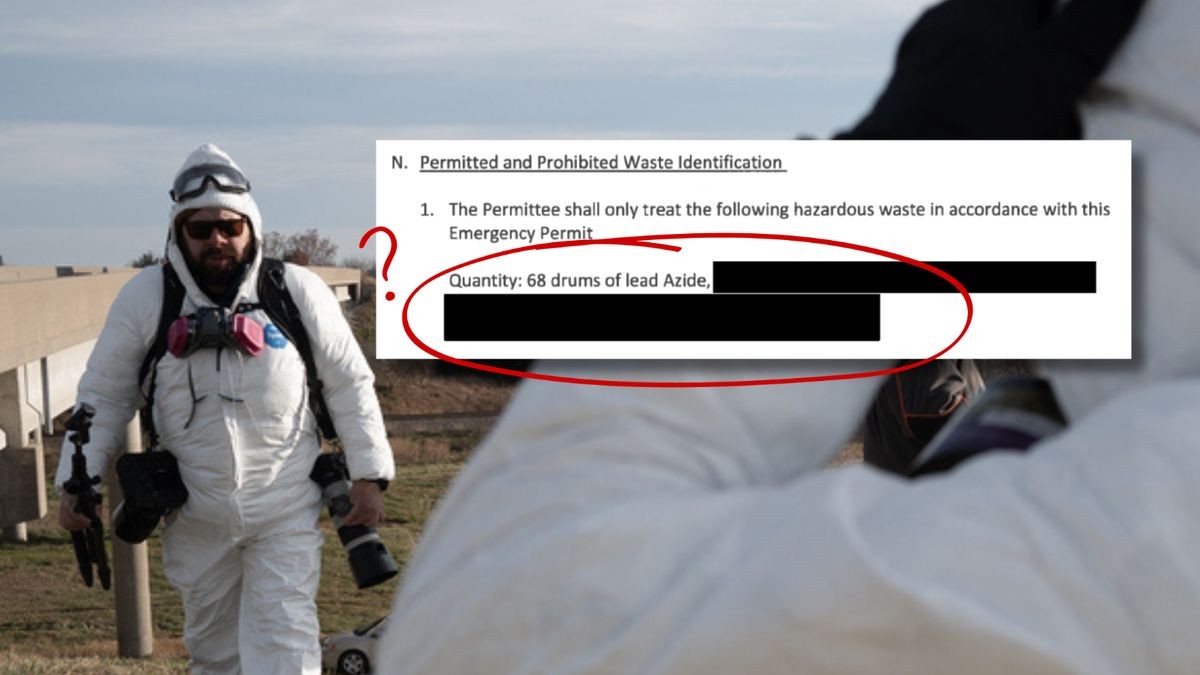
The U.S. Army destroyed 68 drums of highly explosive lead azide in Middletown, Iowa, on Nov. 25, while redacted federal permit language continued to fuel questions about what else may have been included.
Officials announced that the detonations were successful. The Environmental Protection Agency said its real-time air monitors had not detected airborne lead more than an hour after the blasts, but the agency has not publicly explained the blacked-out passages in its emergency permit.
What the EPA emergency permit says
Screenshots circulating on social media appeared to show that the Army had permission to treat additional, unidentified materials as hazardous waste. One post asked whether the 68 barrels of lead azide were “not even the most scary, dangerous, poisonous part.”
The underlying document is authentic, according to Snopes' examination of the permit. That does not establish that the Army detonated any substance besides lead azide. Snopes left the claim unrated because the redactions make it impossible to determine what the missing text describes.
The EPA issued the emergency permit to the Army after finding an “imminent and substantial endangerment to human health and the environment.” The authorization allowed the military to treat the cache as hazardous material and proceed with the disposal operation.
Page 2 identifies the material as lead azide and lists hazardous waste codes D003 for reactivity and D008 for the toxicity characteristic for lead. It also lists CAS Number 13424-46-9 and the Department of Transportation shipping classification Hazard Class 1.1A, UN0130.
The quantity line reads: “There are 68 drums of Lead Azide,” followed by redacted text. Page 12, Section IV.N.1, repeats the quantity before two more redactions under instructions limiting what the permit holder may treat.
A second widely shared screenshot also came from a genuine EPA document, PDF page 74. It placed information about lead azide beside heavily redacted details that appeared to concern other materials, according to Snopes.
Why the Army requested redactions
The EPA addressed the withheld information on Nov. 23, two days before the detonation.
“The permit and permit application materials contain redacted elements for critical infrastructure security purposes at the request of Department of Army,” the agency said.
That explanation confirms who requested the redactions and the stated reason for them. It does not reveal whether the hidden passages identify additional waste, provide more technical details about the lead azide, or cover another subject.
Snopes said it asked the EPA and the Army why the information was considered a security threat and whether the public should be concerned about anything else destroyed alongside the lead azide. Neither agency had responded by the time Snopes published its Nov. 26 report.
Court fight preceded the Middletown detonation
The disposal followed months of concern over the deteriorating cache at an ammunition plant in southeastern Iowa. The Washington Post reported that the discovery came eight months before the planned detonation, with the Army arguing that blowing up the barrels was the only safe option.
Environmental groups went to court in an effort to stop the operation. A federal appeals court rejected their bid on the Monday before the scheduled Wednesday morning detonation, removing the final legal obstacle described in CNN's report on the ruling.
The Associated Press also reported that the Army received federal appeals court approval before moving forward. The court decision allowed the operation to proceed, but it did not resolve the separate public questions created by the permit's redactions.
What Iowans still do not know
The authentic documents support a narrow conclusion: the EPA permit contains undisclosed language beyond the repeated references to 68 drums of lead azide. They do not, on their own, verify online claims that secret chemicals were detonated.
The air-monitoring result addresses an immediate safety concern. The EPA said its real-time equipment detected no airborne lead more than an hour after the explosion. That measurement does not explain the redacted waste-identification language.
For residents living near the Middletown site, the remaining dispute centers on basic government accountability. Federal officials have disclosed the security justification for withholding the text, but not enough information to settle what the passages contain.
Snopes said it would update its reporting if additional information surfaces or if the Army and EPA answer its questions.
Questions about the Iowa detonation
Did the Army detonate chemicals other than lead azide?
That remains unclear. The redacted documents do not confirm that other materials were destroyed, and Snopes left the claim unrated because the missing text cannot be interpreted conclusively.
What did EPA air monitors detect after the blasts?
The EPA said its real-time monitors had not detected airborne lead more than an hour after the Nov. 25 detonation. Officials announced that the operation was successful.
Why were parts of the emergency permit blacked out?
The EPA said on Nov. 23 that elements were redacted for critical infrastructure security purposes at the Army's request. The agency has not publicly detailed the specific security concern.