
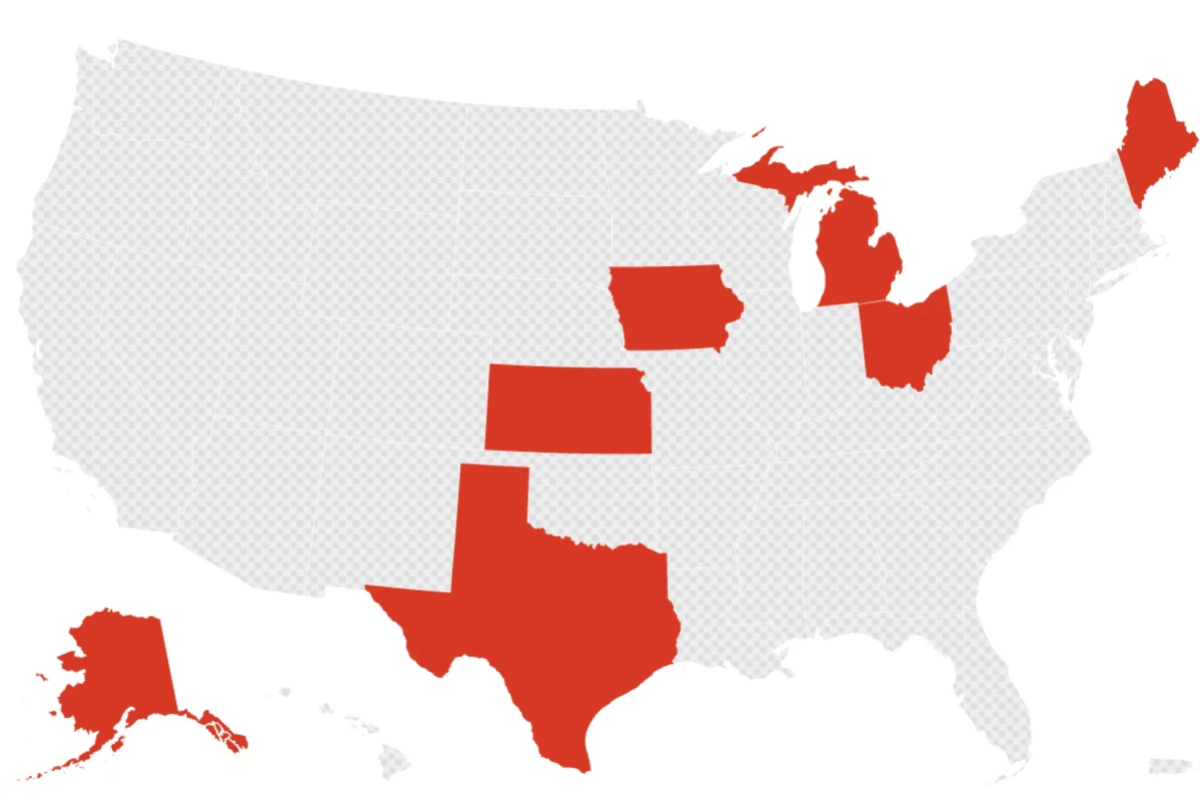
Iowa's U.S. Senate race between Republican Representative Ashley Hinson and Democratic state Representative Josh Turek is rated a toss-up heading into Tuesday's midterm election, one of seven contests nationwide that will determine which party controls the chamber. The race is tighter than Iowa's recent Republican lean would suggest, with polls showing the candidates separated by a single point or less.
According to
Seven toss-up races will decide the Senate
Republicans currently hold 53 Senate seats, compared with 47 held by Democrats and independents who caucus with them. That arithmetic means Democrats must flip four Republican seats to take the majority, a steep climb that early in the cycle looked nearly impossible because so few GOP-held seats were up in competitive states. Polling in the final weeks, however, has expanded the battleground into states President Donald Trump carried by double digits.
Besides Iowa, the toss-ups are in Alaska, Kansas, Maine, Michigan, Ohio and Texas, according to the Cook Political Report. All of those seats except Michigan are currently held by Republicans. CNN has identified as many as 10 races that could decide the chamber,
Hinson and Turek in a statistical dead heat
Trump carried Iowa by 13 points in 2024, but the Senate race has tightened as the state grapples with the impact of tariffs and high diesel prices. Iowa twice backed Barack Obama before supporting Trump in all three of his presidential runs.
Hinson led by fewer than 2 points in an InsiderAdvantage poll, 47 percent to 45.5 percent, conducted among 1,200 likely voters on October 21 and 22. A YouGov poll conducted earlier in October showed Turek with a single-point lead, 47 percent to 46 percent, among 2,245 likely voters. Both results fall within the polls' margins of error.
Both candidates have struck centrist tones in the campaign's final stretch. Hinson has called for an immediate end to the Iran war, saying the state has been squeezed economically because of it, according to Newsweek's reporting. Turek has adopted a more moderate position on social issues, including transgender athletes.
Why the map got harder for Republicans
The Senate landscape tightened as Trump's approval rating fell in recent polls. YouGov and The Economist found a net approval rating of negative 19 points, with 39 percent approving and 58 percent disapproving, in a survey of 1,440 registered voters from October 23 to 26. Only 33 percent of Americans said they were satisfied with the direction of the country. Democrats also showed more enthusiasm, with 53 percent saying they were more eager to vote this year compared with 40 percent of Republicans.
Stephen Farnsworth, a political science professor at the University of Mary Washington, told Newsweek that Democrats have recruited strong candidates in conservative states that have emerged as battlegrounds.
“The main advantage Democratic candidates have is the unpopularity of the president, who seems to be campaigning largely in what are usually Republican-dominant states,” Farnsworth said.
The other races to watch
In Alaska, Republican Senator Dan Sullivan faces former Representative Mary Peltola, whom Democrats view as one of their top recruits of the cycle. A Data for Progress poll gave Peltola a 2-point lead in the final round of ranked-choice voting. The Department of Justice sued Alaska in October over a second candidate named Daniel J. Sullivan, arguing his candidacy's sole purpose is to draw votes away from the incumbent.
In Kansas, GOP Senator Roger Marshall leads Democrat Adam Hamilton by a point in an InsiderAdvantage poll, though a YouGov survey put Hamilton up 3. The farm state has been strained by soaring diesel prices tied to the Iran war, and Marshall has faced criticism after The New York Times reported he allegedly sued more than 700 patients over unpaid medical bills.
Maine Senator Susan Collins trails former Maine Senate President Troy Jackson by 2 points in both Marist and Suffolk polls. In Michigan, progressive Abdul El-Sayed leads former Representative Mike Rogers by 1 to 2 points in the race to succeed retiring Democrat Gary Peters. In Ohio, former Senator Sherrod Brown holds a narrow lead over Republican Senator Jon Husted, and in Texas, Democrat James Talarico leads Republican Attorney General Ken Paxton by 5 in one poll while a Fox News survey shows a dead heat.
What it means for Iowa and the country
For Iowa voters, Tuesday's outcome will answer whether the state's decade-long shift toward Republicans holds, or whether economic pressure on farmers and small businesses has opened a door for Democrats. For the country, the seven toss-ups will decide whether Republicans keep a governing majority in the upper chamber or whether Democrats complete a four-seat flip that few analysts thought possible a year ago.
Frequently asked questions
Who is running for U.S. Senate in Iowa?
Republican Representative Ashley Hinson faces Democratic state Representative Josh Turek in the November midterm election. Polls show the race within a single point.
How many seats do Democrats need to win the Senate majority?
Democrats need to flip a net of four Republican-held seats to reach a majority. Republicans currently hold 53 seats.
Which Senate races are rated toss-ups?
The Cook Political Report rates races in Alaska, Iowa, Kansas, Maine, Michigan, Ohio and Texas as toss-ups. Every one except Michigan is currently held by a Republican.
When is Election Day?
Election Day is Tuesday, November 3, with polls closing across Iowa in the evening.