
Iowa Gov. Kim Reynolds issued a disaster emergency proclamation Tuesday for three counties and activated up to 100 National Guard soldiers ahead of Wednesday’s planned detonation of nearly five tons of lead azide.
The order covers Des Moines, Lee and Van Buren counties as the Army prepares to destroy about 9,700 pounds of the volatile explosive at the Iowa Army Ammunition Plant in Middletown. The controlled detonation is scheduled for 9 a.m. Central time Wednesday, according to Aol.
Reynolds opens state resources to southeast Iowa
The governor’s emergency proclamation authorizes state agencies to deploy available personnel, supplies, equipment and materials to assist residents in the three counties. Reynolds said Iowa agencies are working with federal and local officials before, during and after the operation.
“Iowa agencies are actively engaged alongside our federal and local partners, and we remain focused on ensuring communities have the information and resources they need before, during, and after the operation,” Reynolds said.
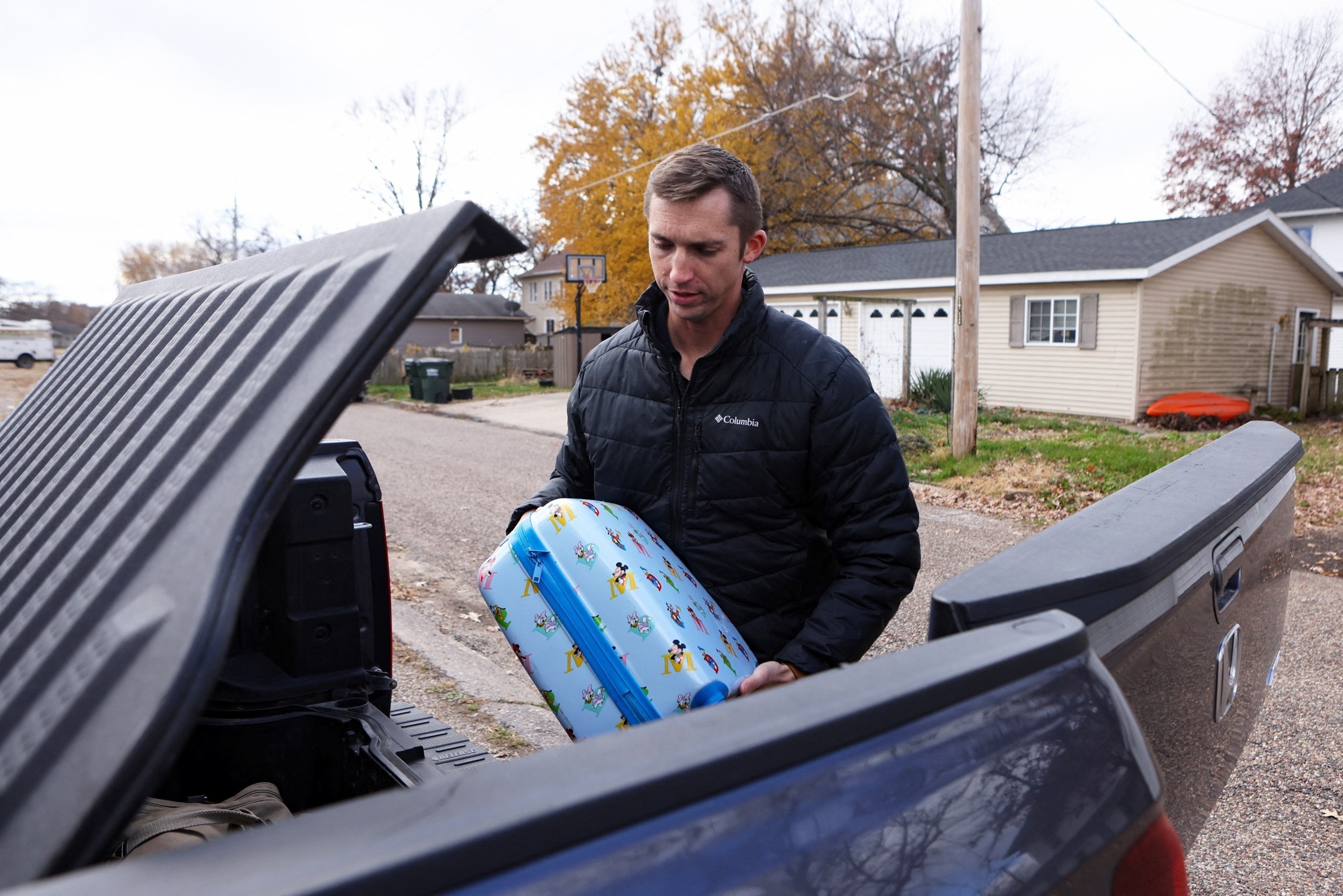
Up to 100 federally activated Iowa National Guard soldiers will support community outreach to approximately 150 households identified by local and federal authorities. Their assignment is to provide official guidance and help residents who follow the recommendation to leave temporarily.
Who is being asked to evacuate?
The Army’s recommended evacuation area covers a five-mile cone extending southwest from the ammunition plant and one mile beyond the dispersion path. Residents in that area were advised to leave Tuesday and remain away until Friday at the earliest.
Federal health officials placed particular emphasis on pregnant women, children and people with chronic illnesses living near the plant. Sean Kaufman, principal deputy assistant secretary for preparedness and response at the U.S. Department of Health and Human Services, also urged uneasy residents outside the immediate area to consider their families’ needs.
“Outside of that area, if you’re close to that proximity and you’re uncomfortable, I think you need to do what you need to do to take care of your family,” Kaufman said.
Federal Emergency Management Agency Administrator Cam Hamilton said transportation, relocation assistance and food would be available to people within the southwesterly area who choose to leave.
“We’ve made it very clear to those who are within a southwesterly location, if they choose to relocate, we will offer services,” Hamilton said.
The Iowa Department of Agriculture and Land Stewardship issued separate guidance for farmers. Producers were told to consider moving livestock to another location or placing animals inside a barn, machine shed or other shelter when possible.
Missouri Gov. Mike Kehoe activated his state’s Emergency Operation Center Tuesday as a precaution. Kehoe said the step would make resources available if needed and that state agencies would work to protect residents and livestock.
Why the Army says the detonation is necessary
Lead azide is the primary explosive used to initiate munitions such as grenades and artillery shells. Maj. Gen. Eric Shirley, commanding general of the U.S. Army Sustainment Command, said months of research produced no other safe way to dispose of the deteriorating barrels stored at Middletown.
“Inaction is no longer an option,” Shirley said.
Acting Army Secretary Adam Telle said experts developed measures intended to limit the blast’s effects. Those measures include a waterwall, foam barriers and gel blocks designed to contain the explosion.
Col. Aaron Teller, group commander of the 71st Explosive Ordnance Disposal, said chemical treatment was no longer viable because the barrels had deteriorated rapidly during the past eight months.
“We’ve observed a significant accumulation of crystallized lead azide on the exterior of the barrels, including the barrel lids,” Teller said. “So it prevents those barrels from being able to be moved, it prevents the barrels us from removing the lids of the barrels.”
Telle said the Army and other government agencies examined disposal options after the plan was established in March. Officials maintained that the preparations were sufficient to protect the public while continuing to recommend evacuation as a precaution.
Court challenge delayed the operation
The explosion was originally scheduled for the previous week but was postponed twice because of weather conditions and litigation.
The Iowa Environmental Council and Sierra Club Iowa Chapter filed an emergency motion Thursday, arguing that the detonation could spread lead dust over a broad area and potentially affect communities more than 100 miles from the plant.
Late Thursday night, the Eighth Circuit Court of Appeals granted an administrative stay of the permit while considering the request to stop the operation formally. The court lifted that stay Monday and denied the emergency motion.
The environmental organizations said they would not pursue additional legal action after Monday’s decision. They called on the federal government to remain transparent with the public about the detonation and its monitoring results.
Lead monitoring will continue after the blast
Tom Croci, associate administrator for national security and operations coordination at the Environmental Protection Agency, said the agency would monitor lead levels until officials are confident they have returned to safe levels.
“The information that’s acquired real time in the field will be consolidated and then put out publicly,” Croci said.
NASA announced Tuesday that it had sent three research aircraft and scientific equipment to collect environmental and atmospheric information around the plant. The agency is also using data from TEMPO, a satellite instrument that monitors pollution and other atmospheric conditions.
NASA said the aircraft and satellite information would help federal officials assess conditions and guide the response. The agency added that it was working with other federal offices and could supply additional equipment and scientific experts if needed.
Iowa lead azide detonation questions
Which Iowa counties are under the emergency proclamation?
Des Moines, Lee and Van Buren counties are covered. The proclamation allows state resources to be used to assist residents in those counties.
When is the controlled explosion scheduled?
The Army scheduled the detonation at the Iowa Army Ammunition Plant in Middletown for 9 a.m. Central time Wednesday.
When can evacuated residents return home?
The Army said residents should remain relocated until Friday at the earliest. Evacuated individuals will receive a phone call when officials give the all-clear and may then return home at their convenience.