
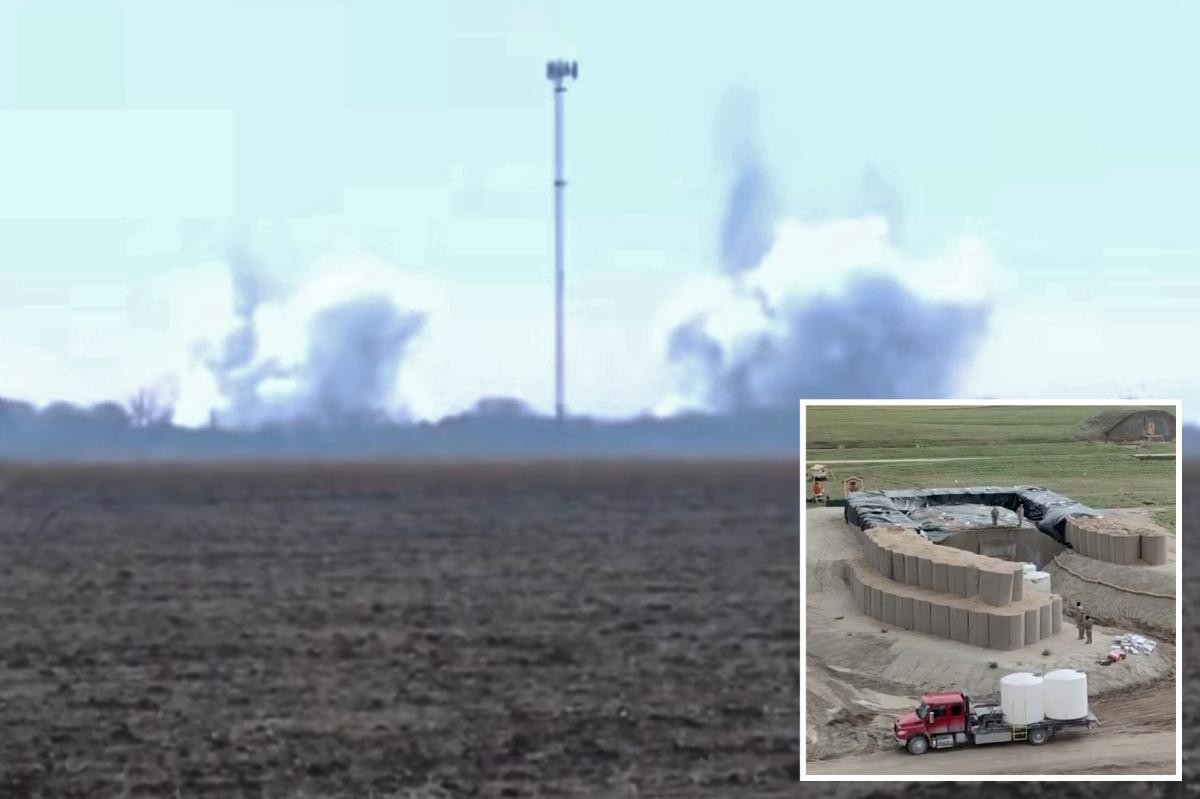
Federal air monitors detected no airborne lead Wednesday, Nov. 25, after the Army destroyed nearly 5 tons of deteriorated explosives at the Iowa Army Ammunition Plant in Middletown, EPA Administrator Lee Zeldin said.
The U.S. Environmental Protection Agency said all of its real-time air monitors throughout the region reported zero detection one hour after the controlled detonation. The monitors continued collecting data during the blast, according to the EPA’s initial air monitoring update.
The result offered an encouraging first reading for Middletown and nearby communities, but Zeldin said he would not declare the area safe before reviewing additional data. The early findings cover airborne lead, not possible contamination on surfaces or in soil, according to the New York Post report.
What happened at the Iowa Army Ammunition Plant
The Army detonated the charges at 9 a.m. local time. The operation destroyed 68 drums of lead azide, a highly sensitive compound used to set off larger munitions. The material had deteriorated while in storage.
Zeldin said the controlled blast performed as planned, collapsing inward and driving into the ground to help keep lead dust contained. He said defense officials told him the mitigation effort exceeded expectations.
“It is an extraordinarily good sign when the early numbers come in so low that it equals essentially a non-detect, a zero detect,” Zeldin told CNN anchor Pamela Brown.
His comments came during a CNN interview after the detonation. Zeldin described the initial outcome as about as good as could have been expected while stopping short of issuing a final safety determination.
Why Zeldin is waiting for more test results
Zeldin pointed to the federal response after the Sept. 11 attacks, when the EPA told people it was safe to go outside before that conclusion was warranted. He said that history argues against rushing out an all-clear.
“I’m not going to rush and just immediately declare, everything is safe before I can receive the data, that we can transparently release it publicly,” he said.
At a later briefing, federal officials did not say whether lead had been detected on surfaces or in the soil. That distinction matters because Wednesday’s zero readings apply specifically to the EPA’s air monitoring network.
The agency had about 300 employees and contractors on the ground. Before the blast, crews collected roughly 1,200 samples of air, land, dust and water to establish a baseline for comparison.
Court fight and delays preceded the controlled blast
The detonation was initially scheduled for Nov. 20. Officials delayed it three times as local opposition grew and environmental organizations challenged the federal government’s plan.
The Sierra Club and Iowa Environmental Council filed a lawsuit seeking to stop the operation. Their challenge targeted the emergency permit issued by the EPA, which Zeldin’s agency approved to allow the destruction of the stockpile.
A federal appeals court reinstated the permit Monday, clearing the way for Wednesday morning’s detonation. The court action ended the immediate legal obstacle, while calls for more information about the stockpile and the government’s handling of it continued.
Trump administration officials credit coordinated response
Zeldin credited White House chief of staff Stephen Miller with coordinating the federal agencies involved in the operation. He asked CNN viewers to separate any disagreements with Miller from his handling of the response.
“Put aside any disagreements any expressed ever with your audience as it relates to Stephen Miller,” Zeldin said.
“I have never witnessed an individual take the reins of the interagency process as exceptionally as what I have witnessed over the last few days,” he added.
Miller directed praise toward President Donald Trump and faulted the Obama administration for placing and storing the explosive material in Iowa in 2009.
“President Trump has assembled the most exemplary team of leaders and patriots we have ever seen,” Miller wrote on X.
He congratulated Zeldin and other agency leaders for what he called the flawless execution of the controlled demolition of materials improperly stored by the Obama administration.
Iowa governors respond to the detonation
Republican Gov. Kim Reynolds welcomed the initial outcome for residents living near the ammunition plant.
Reynolds called it a “best-case scenario for the residents of Middletown and its surrounding communities.”
Democratic Gov.-elect Rob Sand focused on the run-up to the operation and the unanswered questions about how the stockpile reached such a dangerous condition.
Sand said the process “should never have been so chaotic and unclear” and demanded “immediate transparency” about how the material was allowed to deteriorate.
The two responses frame the next stage of the federal government’s work. The early air readings address one immediate concern, while the full testing results and an account of the stockpile’s storage remain outstanding.
Questions about the Iowa detonation
Did EPA monitors detect lead after the blast?
No airborne lead was detected by the EPA’s real-time monitors one hour after the detonation, according to the agency. Officials had not announced surface or soil results by Wednesday’s later briefing.
What material did the Army destroy in Middletown?
The Army destroyed 68 drums containing nearly 5 tons of deteriorated lead azide, a sensitive compound used to initiate larger munitions.
Has the EPA declared the area safe?
No. Zeldin said he wants to receive the remaining data and release it publicly before making that determination.
Federal officials had not said Wednesday when the surface, soil and other comparison results would be released.