
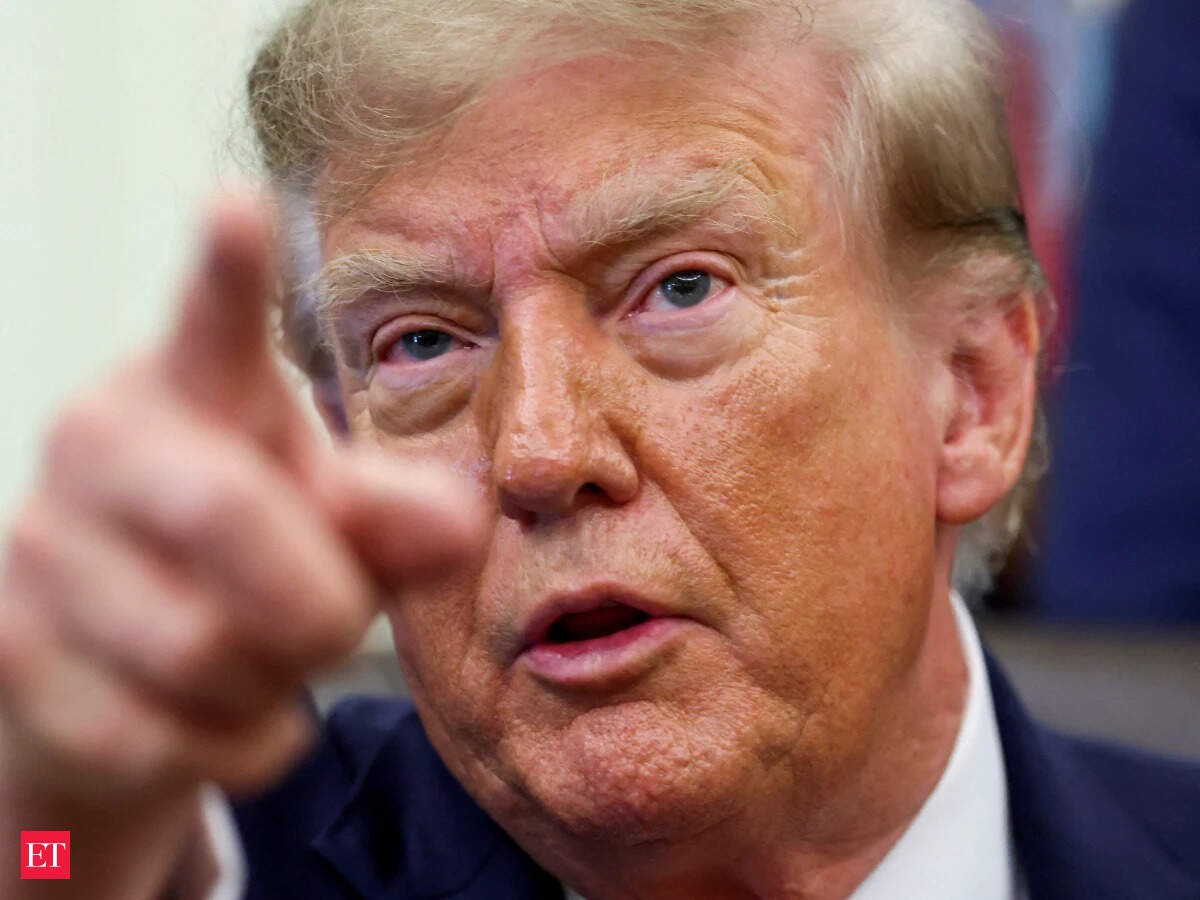
President Donald Trump will campaign in Iowa, Florida, Michigan and Texas in the final stretch before the November 3 midterm elections, as Republicans fight to keep their narrow majorities in the House and Senate. Democrats need a net gain of four seats in each chamber to seize control of Congress and gain the power to challenge the Trump administration.
The president has put himself front and center in the closing days despite an approval rating that has fallen to an all-time low of 31 percent in a Reuters/Ipsos poll, according to Economic Times. Trump has urged voters to treat him as if he were on the ballot, a message aimed at firing up his base, though analysts note it could also motivate Democrats and independents to rally against his party.
Three issues shaping the election
The campaigns are being shaped nationally by Trump himself and by two voter concerns that will sound familiar to any Iowan: the cost of living and immigration.
Cost of living tops voter concerns
Voters have consistently ranked the cost of living as the number one issue this cycle. Half of registered voters surveyed in a recent Reuters/Ipsos poll cited it as the most important factor in how they will vote, with healthcare, gasoline, food and housing named as the household bills lawmakers should address first.
Gas prices have spiked since the US and Israel launched military strikes on Iran in February. The national average for a gallon of gas stands at $4.28, up $1.20 from a year ago, according to AAA. Diesel averages $6.32, a $2.70 jump from a year earlier, a figure that hits Iowa farmers and truckers especially hard during harvest season.
Grocery costs rose 1.8 percent over the past year, according to US Bureau of Labor Statistics data, and Federal Housing Finance Agency figures show home prices climbed 2.1 percent. Congress passed a bipartisan housing bill earlier this year, and it became law without Trump's signature.
Republicans point to their top legislative achievement, a tax cut extension that trimmed roughly $1 trillion in spending from Medicaid and other health programs. Democrats last year forced a government shutdown over a failed push to extend expiring health subsidies that benefited 24 million Americans, and they have vowed to pursue an affordability agenda and investigate alleged administration corruption if they win either chamber.
Immigration: a record to run on
On the border, Republicans have a record they are eager to advertise. Preliminary Department of Homeland Security data showed a 95 percent drop in migrants apprehended at the southwest border compared with the Biden administration, and the agency reported there have been no Border Patrol releases the entire fiscal year for the first time ever.
The record is not without friction. Fatal encounters with federal immigration agents have occurred in Maine, Minnesota and Texas, and the deaths of two US citizens in Minnesota pulled many Democrats in competitive primaries to the left, with some candidates calling for the impeachment of then-Homeland Security Secretary Kristi Noem and others saying Immigration and Customs Enforcement should be abolished outright.
The fight over immigration funding produced a stalemate that forced Republicans to unilaterally pass a $70 billion bill funding ICE and the Border Patrol for the remainder of Trump's presidency. Republicans counter Democratic criticism by arguing the opposition party supports open borders.
Federal immigration officials also raided the Washington home of Democratic Representative Ilhan Omar of Minnesota this month, drawing widespread condemnation from Democrats. A person familiar with the case told Reuters that one potential aim of the investigation could be to strip Omar of her US citizenship and deport her.
Why Trump's Iowa stop matters
The president's decision to rally in Iowa signals that Republicans see the state as both a base-mobilization opportunity and a defense priority. With the outcome of the midterms hinging on a relatively small number of competitive races, turnout among Trump supporters in states like Iowa could decide whether Republicans hold the House and Senate.
Trump's low approval rating cuts both ways, as Rappler noted in its election overview. The same message that energizes his base gives Democrats a rallying point, and the November 3 results will show which force is stronger.
Other issues in play
Artificial intelligence, data centers, cryptocurrency, abortion and Israel could influence individual races. In Ohio's Senate race, Democratic nominee Sherrod Brown has labeled Republican Senator Jon Husted the face of data centers, and the crypto super PAC Defend American Jobs has spent more than $46 million to reelect Husted. In Maine, Republican Senator Susan Collins faces voters for the first time since the Supreme Court ended the federal right to abortion, a vote Democratic nominee Troy Jackson hopes they remember. In Michigan, Republican nominee Mike Rogers has indicated he would accept help from a pro-Israel super PAC that spent more than $30 million backing his opponent's primary rival.
Trump also endorsed Israeli Prime Minister Benjamin Netanyahu for reelection earlier this week, keeping foreign policy in the campaign conversation.
Frequently asked questions
When are the 2026 midterm elections?
The midterms are scheduled for November 3, 2026.
How many seats do Democrats need to take Congress?
Democrats need a net gain of four seats in the House and four in the Senate to control both chambers.
What is Trump's current approval rating?
The Reuters/Ipsos poll puts the president's approval at 31 percent, an all-time low, as US News reported.
Where will Trump hold rallies before the midterms?
The president has rallies planned in Florida, Iowa, Michigan and Texas.